Addressing Taiwan’s Elephant in the Room: The KMT
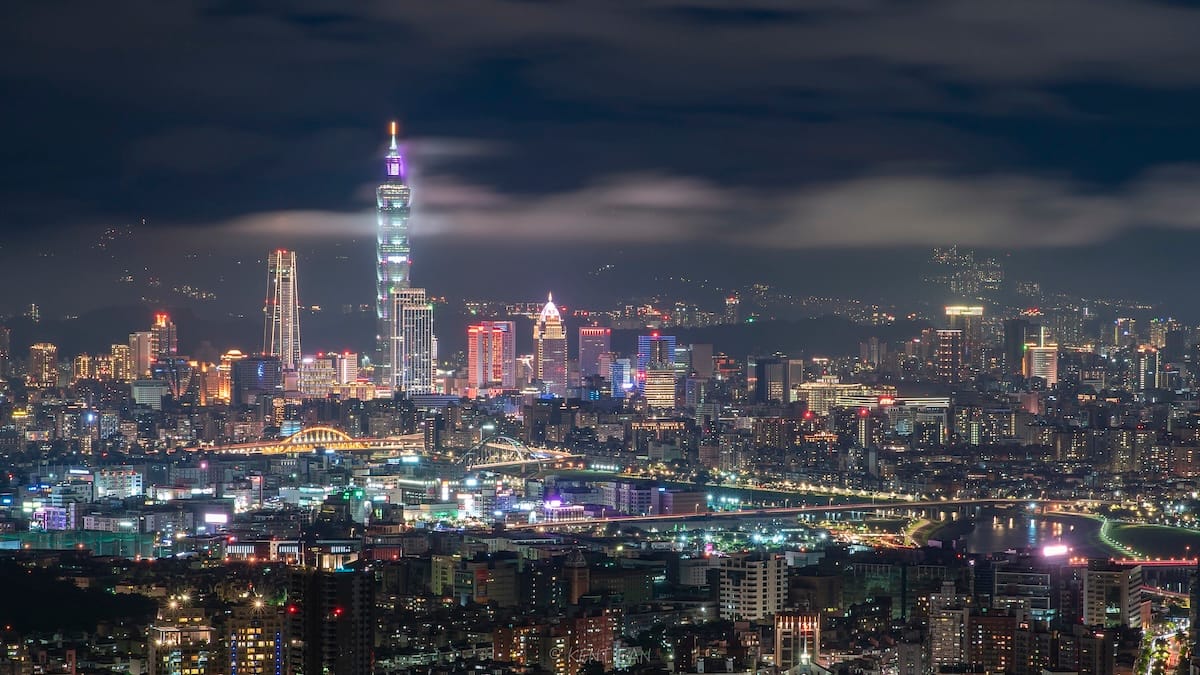
The Chinese military continues to increase its exercises around Taiwan, with the most notable
instance being a surprise blockade drill consisting of 19 identified People’s Liberation Army
Navy ships.
The Trump administration has reaffirmed the U.S.’s commitment to maintaining peace using
deterrence in the Taiwan Strait at meetings with foreign leaders, some including the U.S.’s
closest Indo-Pacific allies, and through a statement by a State Department spokesperson in
March that directly criticized the Chinese military’s actions as well.
The State Department also removed from its website a statement officially opposing Taiwanese
independence.
Of equal importance, the Trump administration has made clear that expediting the delivery of
arms to the island remains a top priority and struck a deal with Taiwan Semiconductor
Manufacturing Company (TSMC) to invest $100 billion in advanced chip manufacturing in the
U.S.—part of a larger effort by the administration to reshore, and thus protect, Taiwan’s
vulnerable semiconductor supply chain.
Taiwan currently spends a meager 2.45 percent of its GDP on defense. However, Taiwan’s
President Lai Ching-te—a member of the pro-independence Democratic Progressive Party
(DPP)—announced that Taipei’s defense spending will soon exceed 3 percent of its economic
output.
It is imperative that Taiwan continue raising its military spending well beyond the announced
increase, possibly by cutting back from certain programs that do not contribute to national
defense, such as the NT $1 trillion (US $33.4 billion) in the budget dedicated to a net-zero
transition by 2030.
The Threat of the CCP Fifth Column in Taiwan
While Taiwan’s efforts to enhance its military preparedness are key to responding to a full-scale
invasion by the Chinese forces, the importance of securing Taiwan internally must not be overlooked, as
the Chinese Communist Party (CCP) commonly deploys tactics of unrestricted warfare.
A report by Taiwan’s National Security Bureau highlights Beijing’s alarming infiltration of the
Taiwanese military, as well as penetration through criminal gangs, religious organizations, civil
society groups, and other channels.
Though President Lai has announced additional measures to combat the Chinese fifth column,
this national security threat persists.
The Elephant in the Room: The KMT
Relatively little attention has been paid to an important actor that has been enabling CCP
infiltration and espionage within Taiwan’s borders: the Kuomintang (KMT), a traditionally anti-
Communist, Chinese nationalist, pro-reunification party founded by Chiang Kai-shek that has
come to embrace stronger ties with Beijing.
At Under Secretary of Defense for Policy Elbridge Colby’s Senate confirmation hearing in March, Alaska
Senator Dan Sullivan (R) rightly noted that the KMT is “playing a dangerous game on their
defense budget.” But the KMT’s actions that place Taiwan in a dangerous position go deeper
than recent budget cuts.
For example, Ma Wen-chun—a KMT legislator who is a member of the Foreign Affairs and National
Defense Committee in the KMT-controlled Legislative Yuan—has been accused of leaking
classified information to undermine Taiwan’s Indigenous Defense Submarine program in
exchange for rewards from China.
The KMT’s Triad History and Present-Day Ties
Quite striking are KMT figures’ ties—both past and present—to CCP-linked criminal
organizations in Taiwan, such as Chang An-lo’s United Bamboo Gang (UBG).
Peter Schweizer claims that Chang maintains a close partnership with the Mexican Sinaloa
Cartel in the fentanyl drug trade, in tandem with China, an allegation the Taiwan High
Prosecutors Office is investigating. This comes at a time when the U.S. is fighting an opioid
epidemic and the Trump administration has moved to designate cartels as foreign terrorist
organizations.
The UBG worked closely with the KMT to violently repress political opponents during the
martial law period (1949-87).
In 2007, the sister of former Taiwanese President Ma Ying-jeou—a senior and active member
within the KMT—traveled to China to meet with Chang during Ma’s campaign. Ma denied
receiving any political donations as a result of this meeting.
During his presidency (2008-16), Ma took a soft approach to Chang. Chang and his supporters
openly harassed and attacked pro-independence, anti-CCP protestors, and even went as far as to
offer Ma protection from these protestors.
Despite heading his own staunchly pro-Beijing political party known as the Chinese Unification
Promotion Party (CUPP), which remains at the fringes of Taiwanese politics, Chang publicly
rallied in support of KMT candidates in previous elections, with the KMT welcoming his support
and the backing of other overtly pro-CCP groups.
DPP officials have proposed officially banning the CUPP. This, however, has been met with
pushback from the KMT. The KMT’s opposition to this action mirrors their proposal to scrap
treason penalties for individuals who pledge allegiance to China.
KMT legislator Lo Ming-tsai’s father—Lo Fu-chu, a former independent legislator who
associated closely with the KMT—is a known gang member who founded the Heavenly Way
Alliance. This triad, being one of the largest in Taiwan, has gained notoriety for its transnational
human and drug smuggling activities, and most recently, for one of its branches (Sun Alliance)
that recruited Taiwanese military personnel to spy for the CCP.
Lo Ming-tsai denies any ties to the organization that his father founded, though his office had
been the site of a deadly gang-related shooting that killed one member and wounded another.
Opening the Door Even Wider
The KMT has also spearheaded people-to-people exchanges with China, with experts often
pointing to the opening up of Taiwan to China during the Ma presidency as planting the seeds for
the CCP fifth column on the island.
Throughout the years, numerous KMT officials, including current KMT Vice Chairman Andrew
Hsia, have traveled to China and held meetings—at times, undisclosed—with CCP officials.
These interactions have raised concerns in Taiwan about information sharing.
Former President Ma also led numerous youth delegations to China and hosted Chinese nationals
in Taiwan through his foundation.
The Path Forward
The time has arrived for U.S. officials to recognize the ways in which the KMT, a major political
actor in Taiwan, is enabling the CCP and to take action with regard to this risk, which includes
blacklisting Taiwan-based, CCP-linked triads, and sanctioning individuals and entities that are
tied to them.
The KMT is working to undermine Taiwan’s security and thus the Indo-Pacific’s security—a
region that is crucial to U.S. national defense. The KMT’s actions that sabotage Taiwan’s
defense capabilities counteract the U.S.’s efforts to maintain peace around Taiwan.
The KMT is undercutting U.S. national security in other ways too, from opening the door to the
theft of U.S. military secrets overseas—given our weapons sales to the self-ruling island and
cases of military espionage and leaks in Taiwan—to the party’s links to questionable groups, like
Chang’s UBG, that aid China in chipping away at American sovereignty through cross-border
drug trafficking.
An approach that puts America’s interests first requires an effective response to threats coming
not just directly from China but also from Beijing’s proxies as well as by way of our allies and
partners, especially those that are strategically positioned.
A Chinese espionage operation against Americans in the Philippines proves just how long and
unscrupulous Beijing’s arm is.
As China expands its reach abroad and diversifies its ways of infiltrating some of our closest and
most strategic allies, elected officials in Washington too must get inventive in how they choose
to counter the greatest threat that the U.S. faces today.
Erik Durneika is a Ph.D. student and graduate instructor in political science at the University of Pittsburgh, where he focuses on comparative politics and international relations. His research explores ethnic conflict, authoritarian governance, and transnational repression, with a regional emphasis on China and Central Asia. You can find him on X: @e_durneika.