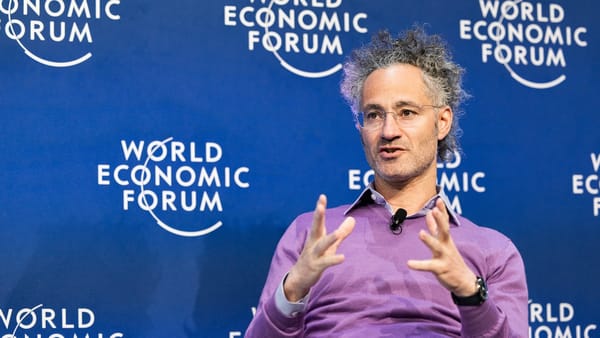
Canada Has a New Leader—Is Mark Carney Heading for a Fight with Trump?

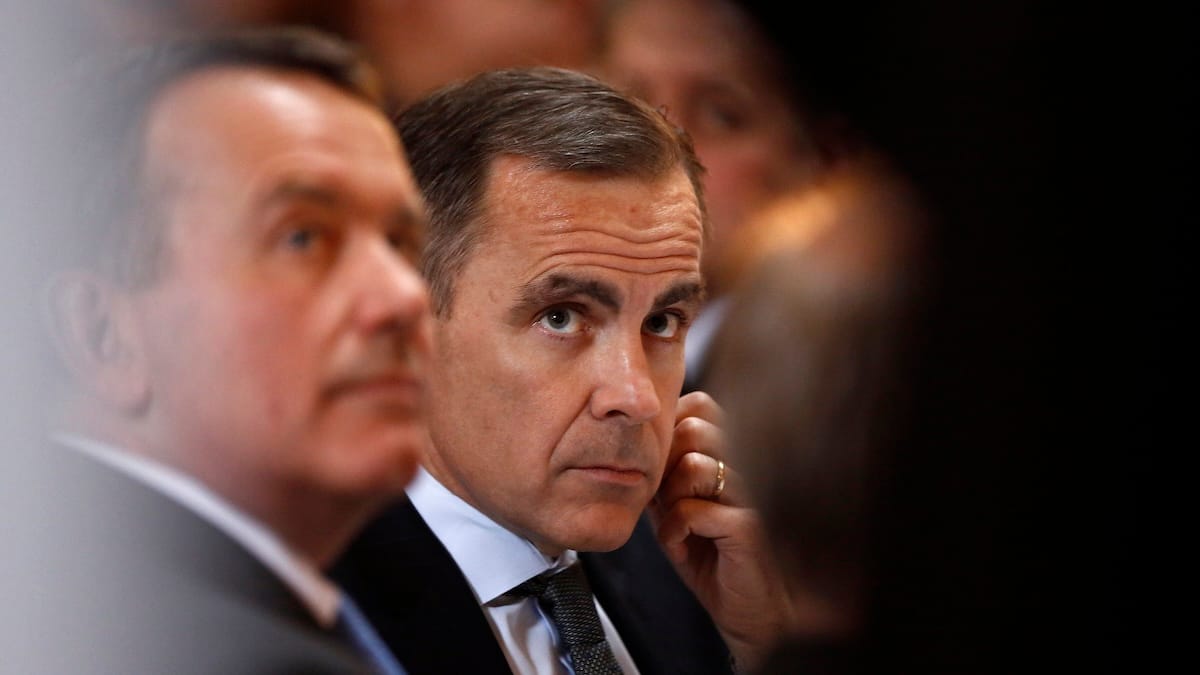
As Canada ushers in a new Prime Minister, Mark Carney, many are wondering how his relationship with President Donald Trump will compare to that of his predecessor, Justin Trudeau. While Trudeau was known for his liberal globalist agenda and tense, often passive-aggressive relationship with Trump, Carney presents a different challenge: an unelected global elitist with a history in high finance and a track record of promoting globalist economic policies. But does Carney truly represent a shift in Canada’s approach to dealing with Trump, or is he just another version of Trudeau in a different package?
Who is Mark Carney?
Unlike Justin Trudeau, who came from a political dynasty but lacked real-world experience outside of academia and activism, Carney is a career banker with deep ties to global financial institutions. Born in Fort Smith, Northwest Territories, Carney studied at Harvard before earning his doctorate at Oxford. He spent over a decade at Goldman Sachs before becoming Governor of the Bank of Canada (2008–2013) and later Governor of the Bank of England (2013–2020), making him the first non-Briton to hold that position.
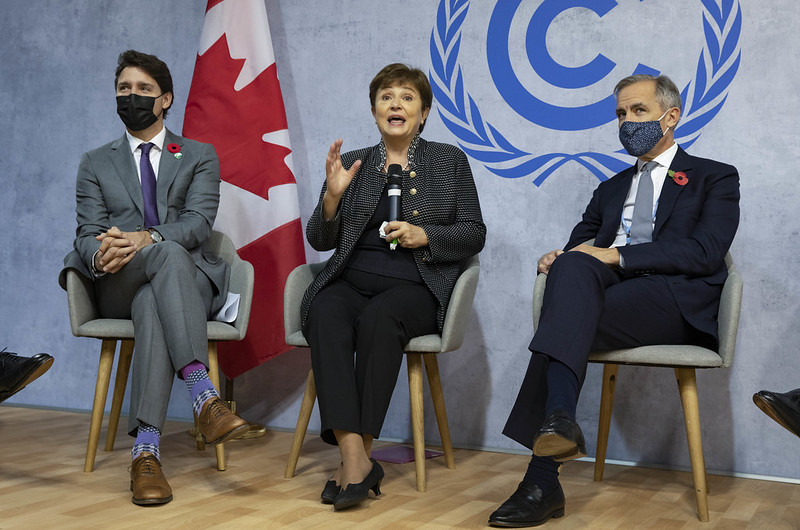
Carney was a key player in the global financial system, navigating economic crises and promoting climate finance initiatives, digital currencies, and progressive monetary policies. His tenure at the Bank of England saw a push for stronger financial regulations, a focus on climate change as an economic threat, and advocacy for “stakeholder capitalism,” which prioritizes ESG (Environmental, Social, Governance) factors in corporate decision-making. In short, Carney represents the economic wing of the Western globalist establishment—one that frequently clashes with Trump’s America First policies.
Carney’s View on Trump
If Trudeau’s problem was that he was too weak and vulnerable to Trump's strategic criticism, Carney’s issue with Trump is one of deep ideological opposition. Carney has made it clear that he considers Trump’s economic policies—particularly tariffs and trade protectionism—harmful to Canada. Since taking office, Carney has attacked Trump’s renewed tariffs on Canadian aluminum and steel, calling them “unjustified” and “an attack on Canadian workers.” He has pledged to retaliate, stating that “we cannot let him succeed. And we won’t.”
Carney has also rebuked Trump’s recent comments about potentially annexing Canada, calling the remarks “laughable” and asserting that “Canada will never, ever be part of America in any way, shape, or form.” While Trudeau had an almost deferential attitude toward Trump (even when attempting to resist him), Carney appears to be gearing up for a more confrontational approach.
https://twitter.com/dwnews/status/1899403676424515699
Beyond trade, Carney’s globalist economic worldview stands in direct opposition to Trump’s economic nationalism. He has long championed climate-based financial policies, urging banks and corporations to divest from fossil fuels. Trump, by contrast, has fought tooth and nail to protect American energy independence, rolling back regulations and promoting domestic oil production. Carney’s fixation on carbon reduction and ESG initiatives places him firmly in the camp of globalist institutions like the World Economic Forum—an organization Trump has repeatedly criticized for undermining national sovereignty.
Trump’s Take on Carney and the Growing Tariff War
While Trump has not extensively commented on Carney personally, he has made it clear that Canada’s latest moves on trade are unacceptable. Just today (March 11), Trump issued a statement slamming Canada for imposing a 25% tariff on electricity exports to the U.S. In response, Trump directed his administration to increase tariffs on Canadian steel and aluminum to 50%, calling Canada “one of the highest tariffing nations anywhere in the world.” He also threatened to declare a National Emergency on Electricity to counter what he calls Canada’s “abusive” trade policies.
Trump didn’t stop there—he also demanded that Canada drop its anti-American farmer tariff of up to 390% on U.S. dairy products. If Canada refuses, he warned that tariffs on Canadian automobiles would increase on April 2, potentially crushing Canada’s auto industry.
It’s clear that the U.S. and Canada are now playing a dangerous game of trade chicken—a game that Canada likely doesn’t want to play with Trump. The last time Trudeau tried to stand up to Trump on tariffs, Canada was left scrambling as U.S. tariffs squeezed key industries. Carney may believe he has the upper hand with support from globalist elites, but in reality, Canada needs access to the U.S. market far more than the U.S. needs Canadian exports.
Stock Market in Freefall—Is the Tariff War to Blame?
As tensions between the U.S. and Canada escalate, the stock market has taken a hit—likely due in part to the uncertainty surrounding tariffs. Investors fear that continued tariff battles could hurt manufacturing and trade, particularly in sectors that rely on cross-border commerce. The question remains: will the (presumably) short-term economic pain be worth it?
Trump has made it clear that he is willing to fight to protect American workers and industries. But does Carney have the same level of conviction when it comes to protecting Canada? Or is he simply posturing to appease his leftist base while quietly hoping Trump backs down first due to worsening market conditions?
Will Canada Address Its Border Issues?
Beyond trade, another issue that Trump has frequently raised is border security—not just at the southern U.S. border, but at the northern border with Canada as well. While the northern border doesn’t see nearly as many illegal crossings as the U.S.-Mexico border, it is far less protected, and reports have indicated that fentanyl and other illicit substances are making their way into the U.S. through Canada.
Given Carney’s globalist background, it is unlikely that he will want to prioritize securing the border or addressing the fentanyl crisis in a way that aligns with Trump’s crackdown on drug smuggling. However, in order to smooth over U.S.-Canada relations, he may have no other choice. Trudeau, in his final months, did make some concessions to Trump on this issue, but it is unclear if the border will be addressed beyond this.
A More Hostile Canada-U.S. Relationship?
With Carney at the helm, the Canada-U.S. relationship under Trump’s second term is likely to be even rockier than it was under Trudeau. While Trudeau’s weakness was usually no match for Trump, Carney may attempt a more aggressive approach—one that could ultimately harm Canada’s economy.
If Carney does pursue this path, we can expect:
- More aggressive Canadian retaliation against U.S. tariffs, possibly resulting in a trade war that damages Canadian industries reliant on U.S. markets.
- Increased alignment with European globalists in opposition to Trump’s economic policies, further distancing Canada from its largest trading partner.
- More climate-based economic restrictions, which would drive up energy prices and hurt Canadian consumers, much as Trudeau’s carbon tax did.
Final Thoughts
Mark Carney may be trying to present himself as a tough negotiator against Trump, but history shows that going head-to-head with Trump on trade is a losing battle for Canada. With tariffs escalating, markets in turmoil, and border issues looming, Carney’s first real test as Prime Minister will be whether he doubles down on globalist policies or faces reality and finds a way to work with Trump. If he chooses the former, Canada could end up paying the price.
Michael J. Hout is Editor-in-Chief of Liberty Affair. Based in Warsaw, Poland, he writes about politics, culture, and history. Follow his latest insights on X: @michaeljhout.