Europe’s Double Standard: Ukraine Defended, Israel Abandoned

In February 2022, when Russia invaded Ukraine, the European Union member
states rightly condemned Moscow for its unprovoked aggression against a sovereign
state. Nearly every EU capital imposed sweeping sanctions on Russia, targeting its
banking sector, energy exports, and key oligarchs, given the blatant violation of
international law. European governments spoke openly of defending democracy and
the rules based order, with frontline countries like Poland and the Baltic states
providing weapons, training, and intelligence support to Ukraine.
Yet this consensus collapses when it comes to Israel’s struggle against Hamas terrorists, who brutally murdered 1,200 civilians and kidnapped over 200, including women and children.Despite these atrocities, far too many European capitals have failed to issue
unequivocal support for Israel’s right to self-defense. The contrast is striking: the
same leaders who rallied behind Ukraine hesitate to offer moral clarity or tangible
backing to a democratic ally confronting existential threats. Worse still, some governments continue to entertain symbolic or rhetorical gestures toward the
“Palestinian” cause, ignoring entirely Hamas’s genocidal agenda and operational
ambitions. European media narratives have, at times, amplified misleading claims
about civilian casualties without adequate context, creating a distorted moral
equivalence and contributing to public confusion. The signal sent to adversaries,
Russia, China, and Iran, is one of hesitation, inconsistency, and vulnerability.
European politicians’ weakness is compounded by mass migration pressures,
opportunistic lobbying from pro-Palestinian interest groups, and domestic
constituencies exploiting moral ambiguity for political gain, leaving the continent
increasingly exposed to existential threats. This inconsistency undermines Europe’s
credibility globally, signals weakness to autocratic powers, and emboldens extremist
actors who interpret hesitation as strategic opportunity.
Israel is a high-tech superpower with a world-class intelligence and military
apparatus, a nation whose strategic relevance every serious global player
recognizes.
Yet European leaders continue to demonstrate appeasement toward
hostile actors and tolerance for aggressive immigrant communities, prioritizing
domestic optics over long-term continental security. If Europe genuinely seeks
strategic autonomy and wishes to counter Russian, Chinese, and Iranian influence, it
must first recognize the geopolitical and moral imperative of a robust alliance with
Israel. False allegations of genocide and starvation form part of a coordinated campaign to delegitimize the Jewish state, which fights for survival against ruthless
jihadi terrorism. Strategic collaboration with Israel strengthens Europe’s defense
posture, providing intelligence, technological innovation, and operational expertise
that European forces cannot easily replicate. Lecturing Israel undermines this
objective. Close alignment also affords access to counterterrorism intelligence,
advanced drone technology, AI-enabled defense systems, and precision strike
capabilities. Beyond moral necessity, the partnership is a practical and strategic
imperative for ensuring European security and maintaining credible power projection
in an increasingly contested global environment. Recognizing Israel as a genuine
strategic partner also allows Europe to diversify military procurement and reduces
reliance on vulnerable transnational supply chains dominated by states with
conflicting agendas.
NATO’s eastern flank countries have already recognized the practical value of Israeli
defense technology. Poland has purchased the Spike anti-tank missile system,
enhancing its armored capabilities. Romania acquired the Shorad-Vshorad anti-
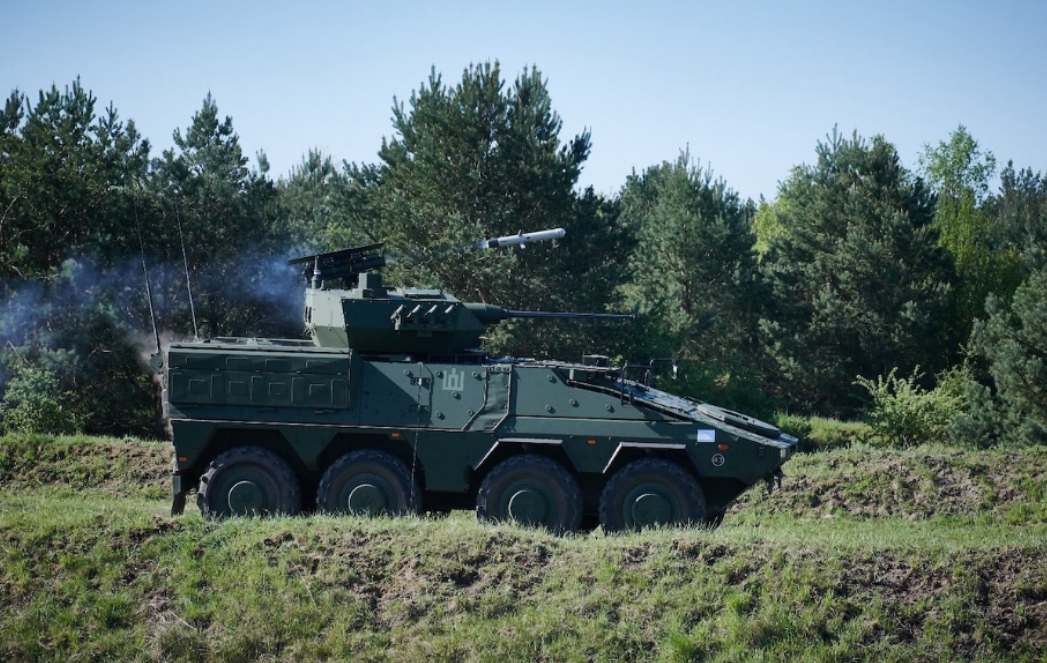
aircraft systems. Lithuania procured the Spike LR system and established a
dedicated maintenance center. The Czech Republic purchased Spike missiles and
collaborates with Israeli firms on advanced defense electronics and cybersecurity
initiatives. Estonia integrated Israeli cybersecurity solutions into critical infrastructure.
These examples demonstrate Israel’s ability to reinforce European security and
serve as a model for broader continental cooperation. Beyond the eastern flank,
Israel is also active on NATO’s southeastern flank, notably with Greece, where
bilateral defense cooperation has expanded significantly.
Israeli and Greek forces
conduct joint military exercises, focusing on maritime security, counterterrorism, and
precision strike operations. Greece has procured Israeli surveillance drones, missile
defense systems, and advanced electronic warfare equipment, while Israeli advisors
provide training on operational readiness and rapid response protocols. These
initiatives enhance Greece’s strategic posture in the Eastern Mediterranean,
strengthen NATO’s southern defense corridor, and create interoperability between
Israeli and Greek forces. These examples demonstrate Israel’s ability to reinforce
European security and serve as a model for broader continental cooperation.
Beyond weapons procurement, intelligence sharing, joint exercises, and
cybersecurity collaboration with Israel provide tangible operational benefits. Beyond
weapons procurement, intelligence sharing, joint exercises, and cybersecurity
collaboration with Israel provide tangible operational benefits. There is also untapped
potential for collaborative R&D in drones, AI-enabled defense systems, and missile
defense. Expanding such cooperation could give Europe a credible technological
edge along vulnerable borders while simultaneously deterring malign actors.
Leveraging Israeli expertise in counterterrorism operations, precision munitions, and
rapid intelligence analysis can accelerate European defense modernization,
strengthen deterrence against adversaries, and cultivate operational excellence
among NATO forces.
Meanwhile, the moral inconsistency of certain European governments, Belgium,
Norway, Spain, and Ireland, remains deeply concerning. By ignoring antisemitism,
downplaying Hamas atrocities, and disregarding the plight of Israeli hostages, these
states betray both principle and practical security interests. Their stance risks
alienating the Trump Administration, which has consistently demonstrated moral
clarity, supporting Israel against Hamas’s savagery and standing resolutely against
the Iranian regime. Unlike some European politicians, Washington acted decisively,
highlighting the contrast between moral weakness and principled leadership. This
failure undermines Europe’s credibility and could further isolate hesitant countries
from strategic allies, leaving them more vulnerable to Russia, China, and Iran.
Cumulatively, these missteps create a perception of Europe as unreliable, sending
mixed signals to friends and adversaries alike, eroding confidence in multilateral
frameworks, and jeopardizing future cooperative defense initiatives.
Israel’s high-tech sector, spanning AI, cybersecurity, and defense robotics, is already
materially beneficial to Europe. Israeli companies collaborate with European partners
in cybersecurity systems, AI-driven border monitoring, autonomous vehicle defense,
and quantum computing projects.
Firms such as Elbit Systems, Rafael AdvancedDefense Systems, and Israel Aerospace Industries provide precision-guided munitions, air defense systems, and military-grade drones.
This collaboration enhances NATO readiness and fortifies European capabilities, particularly along theeastern flank.
Expanding cooperation in counterterrorism intelligence, cyber defense,
and AI-enabled surveillance will reinforce security and accelerate technological
innovation across allied nations. Greater integration of Israeli capabilities can bridge
critical gaps in European readiness, ensure faster responses to emerging threats,
and strengthen deterrence against authoritarian powers. In an era where information
warfare, hybrid threats, and high-tech conflict increasingly define global security,
Israel offers Europe both strategic depth and an operational template for
modernization.
By failing to fully embrace Israel, European nations jeopardize their long-term
strategic interests. Domestic political calculations, fear of confronting antisemitic agents and constituencies, and short-term appeasement weaken Europe’s moral and
geopolitical standing.
Israel, in contrast, combines technological sophistication, operational experience, and unwavering strategic resolve. Partnering decisively withIsrael provides a clear path to strengthen defense, deter adversaries, and foster innovation, ensuring Europe is not left behind in a rapidly shifting security landscape.
Hesitation emboldens enemies while eroding trust with reliable allies, making
strategic recalibration both necessary and urgent. The choice is neither abstract nor
optional, Europe must align decisively with proven partners like Israel or risk
strategic irrelevance in a world of intensifying threats. The moral, political, and
practical imperatives converge, a continent that hesitates in the face of existential
threats undermines not only its credibility but its very capacity to secure its citizens
and project influence on the global stage.