From Rust Belt to Silicon Steel: Trump's AI Bet on Industry
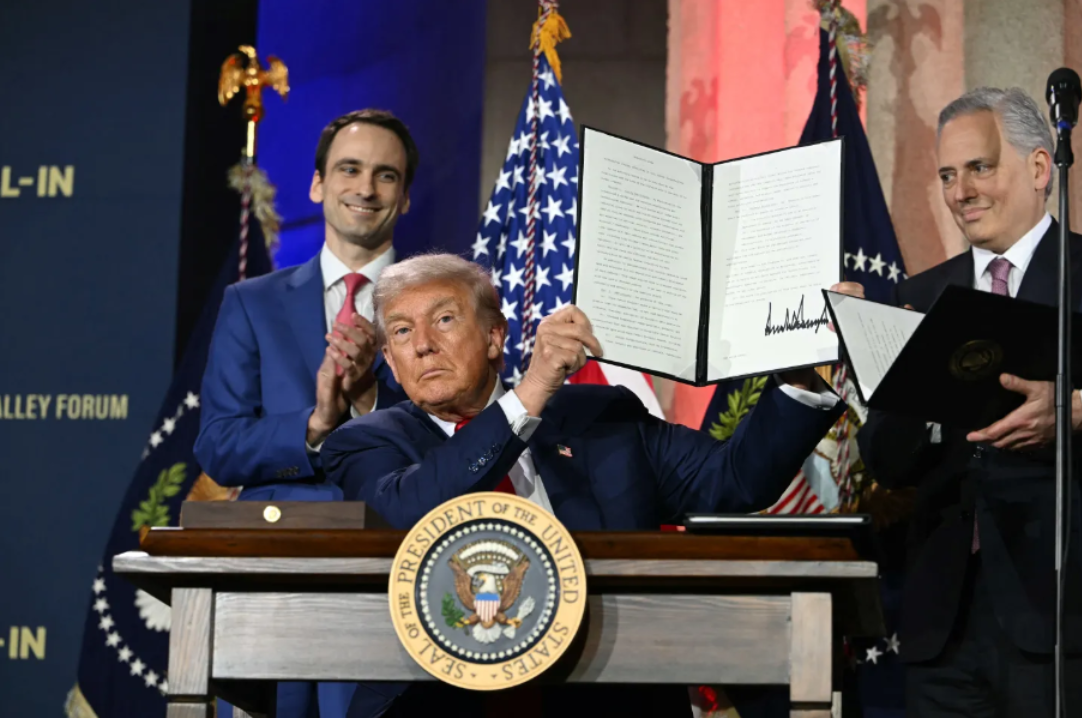
Historians may look back on July 23, 2025, as the moment the United States
reasserted itself, not simply in the global AI race but as a civilization once again
willing to lead. Speaking from the stately columns of the Andrew Mellon Auditorium
in Washington, D.C., President Trump unveiled the America’s AI Action Plan, a
strategic doctrine anchored in national capability, industrial resilience, and the
unapologetic belief that the future belongs to those who build.
It was, in every sense, a rupture from the past. The Biden-era AI policy had been
paralyzed by bureaucratic overreach, strangled by abstract ethical posturing, and
rendered inert by an alphabet soup of task forces and equity audits. “We are done
with overregulation,” Trump declared, echoing a sentiment felt not only in Silicon
Valley but in the forgotten factories of the American heartland. AI policy, under this
new dispensation, is no longer a branch of DEI compliance. It is statecraft, national
strategy, and civilizational necessity.
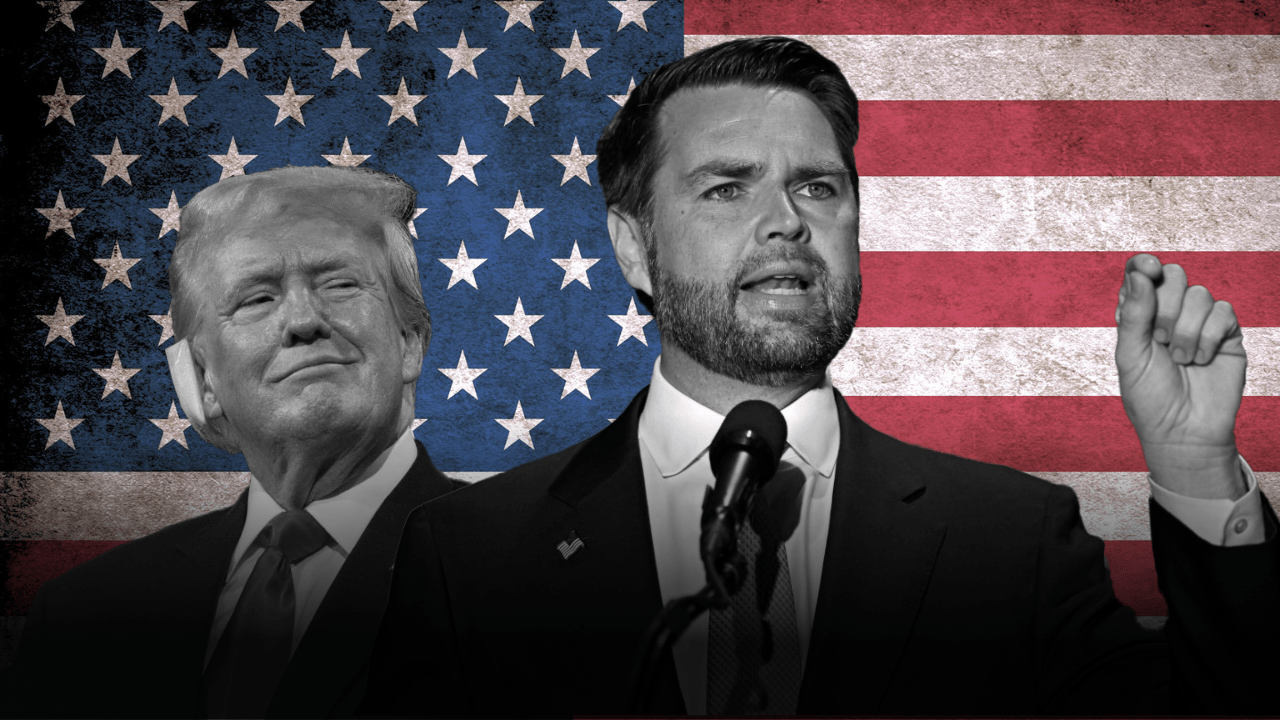
Vice President JD Vance, one of the clearest voices on this new trajectory, delivered
a stark assessment: the West has been sleepwalking into irrelevance. Europe,
paralyzed by its technophobia, treats AI as an existential threat rather than a historic
opportunity. Its leaders are terrified, of disruption, of sovereignty, of responsibility.
Meanwhile, America has dithered, stalling innovation under the weight of
bureaucratic rituals. In a symbolic episode that may mark a new geopolitical
realignment, a leader of a small but strategically vital allied country visited Vance and
proposed a bold new vision, an alliance of sovereign nations, outside the bounds of
NATO, that would commit to sharing a unified AI and technology stack with the
United States. The idea was radical in its simplicity: ditch supranational ideology and
align on compute, code, and capability. Vance’s endorsement signaled a shift from
Cold War-style defense pacts to twenty-first century techno-sovereignty.
Execution of this vision now rests with David Sacks, newly appointed as chairman of
the White House Technology Council and AI and Crypto Czar. Having exited the
investment world, Sacks now acts as the intellectual and operational engine behind
the Plan. He has outlined ninety executive actions to reorient the federal apparatus,
dismantling redundant review processes, terminating politicized funding mandates,
and launching a federal GPU marketplace to break up elite capture of computational
resources. Under his direction, the AI strategy is grounded in three nonnegotiable
pillars: innovation, infrastructure, and ecosystem.
Infrastructure is perhaps the most urgent constraint. As Michael Kratsios
emphasized, America’s advantage will not lie in having the smartest engineers
alone, but in possessing the full-stack infrastructure, data centers, domestic
semiconductors, and energy production. Talent is essential, but without power and
silicon, talent becomes trivia. Kratsios advocated for categorical exclusions under
NEPA, enabling accelerated construction of AI-critical facilities on federal lands. The
Department of Energy is already deploying microreactors and clean hydrogen to
serve future AI training clusters. A nation that cannot power its intelligence is a
nation destined for irrelevance.
Equally vital is the workforce to sustain it. For decades, the American labor force has
been hollowed out, first by offshoring, then by automation fearmongering. Chris
Power, CEO of Hadrian, put it plainly: “We forgot how to make things.” Shipbuilding,
aerospace tooling, advanced machining, entire domains of competence were left to
atrophy. AI, he argued, should not replace labor but redeem it. Through rapid
upskilling, the very tools of Silicon Valley can now be deployed to teach blue-collar
workers precision manufacturing in weeks, not years. His firm is deploying AI-
powered training platforms to build a new industrial class, one that earns dignified
wages, receives real healthcare, and fabricates defense products on American soil.
Tariffs, once maligned by neoliberal orthodoxy, are now being reinterpreted as
strategic instruments. China, for example, offers subsidized energy to its domestic
producers, a structural distortion that cannot be met with polite market competition.
Rebuilding America’s industrial base, as Power insists, requires creating an
asymmetry in our favor.
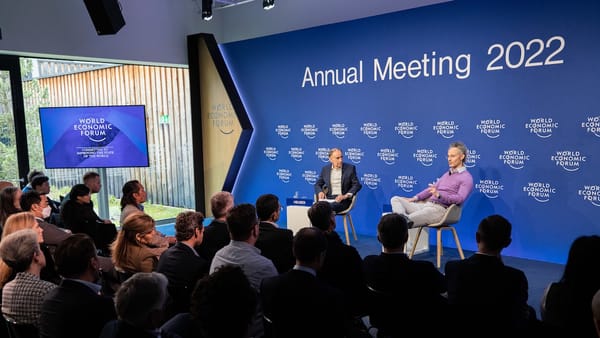
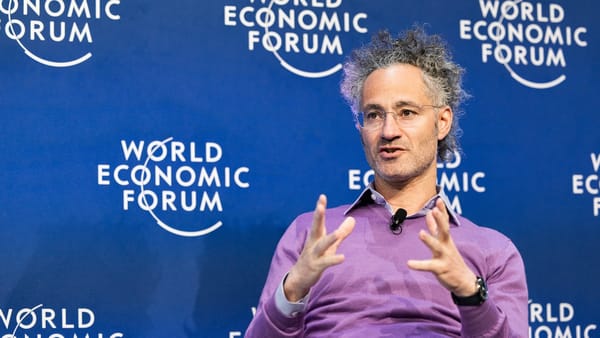
Shyam Sankar, CTO of Palantir, drove the labor point even further. The objective is
not to make workers fifty percent more efficient, it is to make them fifty times more
productive. Coordination overhead, institutional friction, and paperwork, the true
killers of productivity, are being obliterated through AI augmentation. Palantir’s
American Tech Fellow initiative seeks to identify and train high-agency individuals
from across the heartland. After four weeks of AI immersion, they are placed directly
into client companies. At Panasonic Energy, for instance, what once required three
years of training now takes three months. These are not job replacements; they are
job amplifiers. Sankar called this the dwell time crisis, the massive lag between
knowledge and execution. AI, properly deployed, collapses that latency.
Kelly Loeffler, Administrator of the Small Business Administration, emphasized the
need to deploy AI not just in flagship firms but in the 98 percent of American
manufacturers that are small businesses. Without AI, these firms cannot compete.
With it, they can lead. The SBA now offers compute credits, model libraries, and
software grants to help these firms deploy domain-specific AI tools, enabling them to
reshore advanced manufacturing and provide stable jobs where globalization once
brought decay. “AI,” she remarked, “is a job creation machine, not a job destruction
myth.”
Internationally, the Plan recognizes that AI is the new battleground for strategic
influence. The Departments of Commerce and State are building a sovereign
alternative to China’s digital Belt and Road, offering allied countries full-stack AI
packages: secure semiconductors, deployment frameworks, and scalable
infrastructure. Export controls have been tightened, especially against adversarial
nations.
Any international treaty that risks ceding America’s AI advantage to transnational NGOs or ethics councils is rejected categorically. America will not negotiate its own obsolescence.
President Trump’s speech delivered the cultural capstone. “We’re not going to let
California or New York regulate AI for the rest of the country,” he said, striking at the
heart of the emerging threat: fragmented state-level regulation. As Kratsios warned,
if AI regulation becomes a state-by-state matter, the U.S. may end up with fifty
conflicting legal codes, an outcome that would cripple innovation. National
coherence is now a competitive advantage.
The private sector responded with uncharacteristic enthusiasm. Microsoft, Dell,
Palantir, IBM, and others praised the plan’s strategic clarity. There were no tepid
endorsements, only declarations of readiness. Progressives, predictably, cried foul.
But this time, the institutions they control are not where the future is being built.
The America’s AI Action Plan is not a bureaucratic artifact. It is a civilizational wager.
It asserts that America can build again: fabs, data centers, training hubs, software
architectures, and sovereign alliances. It assumes what too many have forgotten,
that productivity is patriotic, that resilience is moral, and that freedom without
capacity is merely ornamental. This is not the end of history. This is history restarted,
with code, silicon, labor, and will.