Help! Ozempic Made My Tooth Fall Out
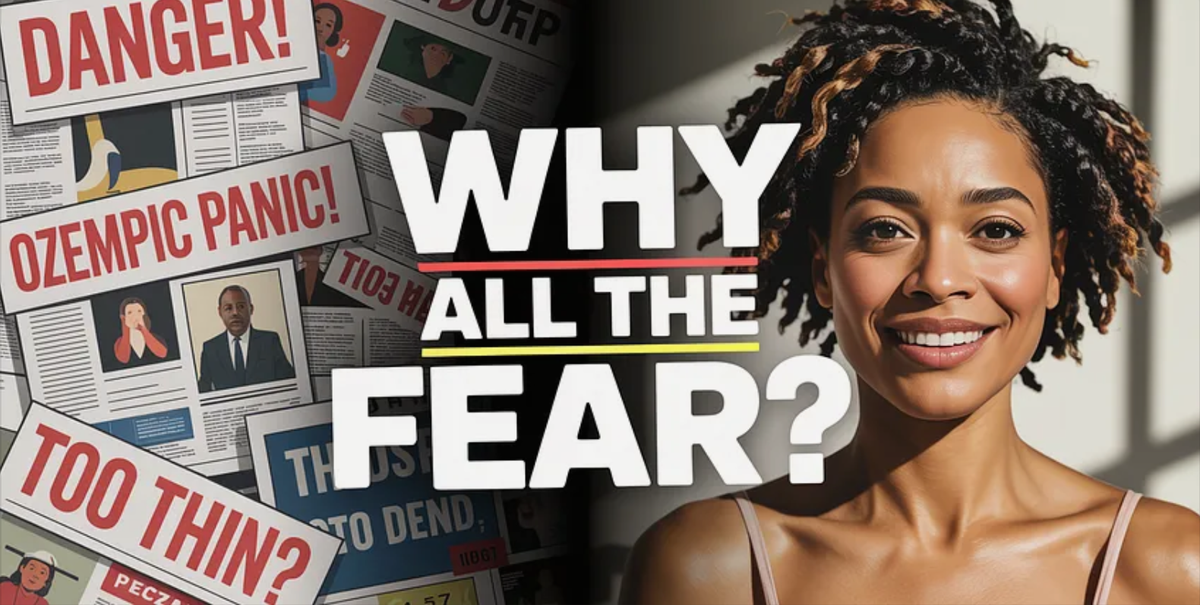
Dr. Aminata Kanu is a biochemist, wellness educator and founder of Eve's Ease, a UK-based company dedicated to supporting midlife women including those on GLP-1 medications. She has a PhD in Biochemistry and is based in London, UK.
I know. The headline got your attention, didn’t it? Well today’s newsletter is about the unrelenting media campaign against GLP-1 medications.
Every day, there’s a story.
- Sharon Osbourne has “gone too far.”
- Ozempic caused my tooth loss.
- Another dramatic warning about the “dangers” of GLP-1 medications.
At this point, it feels relentless. And it begs the question:
Where is this same energy when it comes to the actual harms caused by food addiction, obesity and chronic illness?
Why does it seem like there’s a coordinated media campaign targeting people who are finally getting help?
As a scientist who has worked in drug and disease research and a user of a GLP-1 medication, I’ve been watching this narrative unfold with increasing frustration.
I’ve never seen a medication attract this level of public shaming.
Not statins. Not antidepressants. Not even opioids in the early days.
Yet GLP-1s like Ozempic, Wegovy and Mounjaro are being treated like some kind of public enemy.
Why?
Because they work.
They’re helping people finally take control of their health.
They’re quieting the constant mental noise around food.
They’re regulating appetite, reducing compulsions and supporting long-term weight loss without extreme restriction.
And instead of highlighting those transformational outcomes like lower blood sugar, improved cardiovascular health and even addiction recovery, the media leans into shock, shame and sensationalism. The real crisis is being ignored.
Let’s get serious for a moment.
Obesity isn’t a cosmetic issue. It’s a medical one and a major public health crisis.
It’s linked to:
- At least 13 types of cancer
- Heart disease and stroke
- Fertility challenges and hormonal disruptions
- Depression and diminished quality of life
And let’s not pretend food addiction isn’t real.
The constant exposure to ultra-processed, hyper-palatable foods that have been engineered to override our fullness signals, is a key driver of this epidemic.
But do you see daily headlines calling out the companies profiting from that? No.
Do you see primetime programmes on how much the NHS (or any healthcare system) spends managing obesity-related conditions? No.
Because the system profits when we stay sick.
Let’s see. Who loses when you start healing? Hmmm…
What hapens when you have a population that is not constantly eating, snacking, bingeing or dieting? That is a problem… for a lot of industries.
Who stands to lose?
- The manufacturers of ultra-processed foods
- Fast food conglomerates
- Parts of the diet and fitness industry that depend on repeat customers and ‘failures’
If people stop emotionally eating, if they stop overeating, if they stop feeling helpless, that’s not just a health shift. It’s an economic one.
So is it really far-fetched to imagine that the growing wave of anti-Ozempic and anti-Mounjaro stories might be… strategic?
Fear and outrage sells.
Here’s what you rarely read in those headlines. GLP-1 medications aren’t just for weight loss. They’re being studied and are showing promise in treating:
- Alcohol use disorder
- Nicotine addiction
- Food compulsion and binge eating
- PCOS and hormonal imbalances
- Possibly even Alzheimer’s and Parkinson’s prevention
These medications are not about vanity. For many of us, they represent freedom. Freedom from a decades-long cycle of shame, restriction and health deterioration.
They’re buying us time, restoring our confidence and giving us our lives back. And yet the headlines want us to feel guilty for that.
So, the next time you see a fear-mongering article trying to shame people on GLP-1 medications, take a breath and ask yourself:
Who benefits from me staying stuck?
What would change if I claimed my health without apology?
Because that’s the part no one wants to talk about.
But we’re going to keep talking about it — right here.
We deserve health. We deserve healing. And we don’t owe anyone an apology for getting the help that finally works.
This guest post was written by Dr. Kanu, who provides consulting for menopause wellness, women's financial advice, and helps women over 40 navigate their midlife with confidence, health and purpose. She writes over at My Mounjaro Memo, a resource for anyone interested in GLP-1 medications such as Zepbound, Ozempic, Mounjaro and others.