Honoring the Voice of the Revolution: Why America Needs an Adams Memorial in 2026

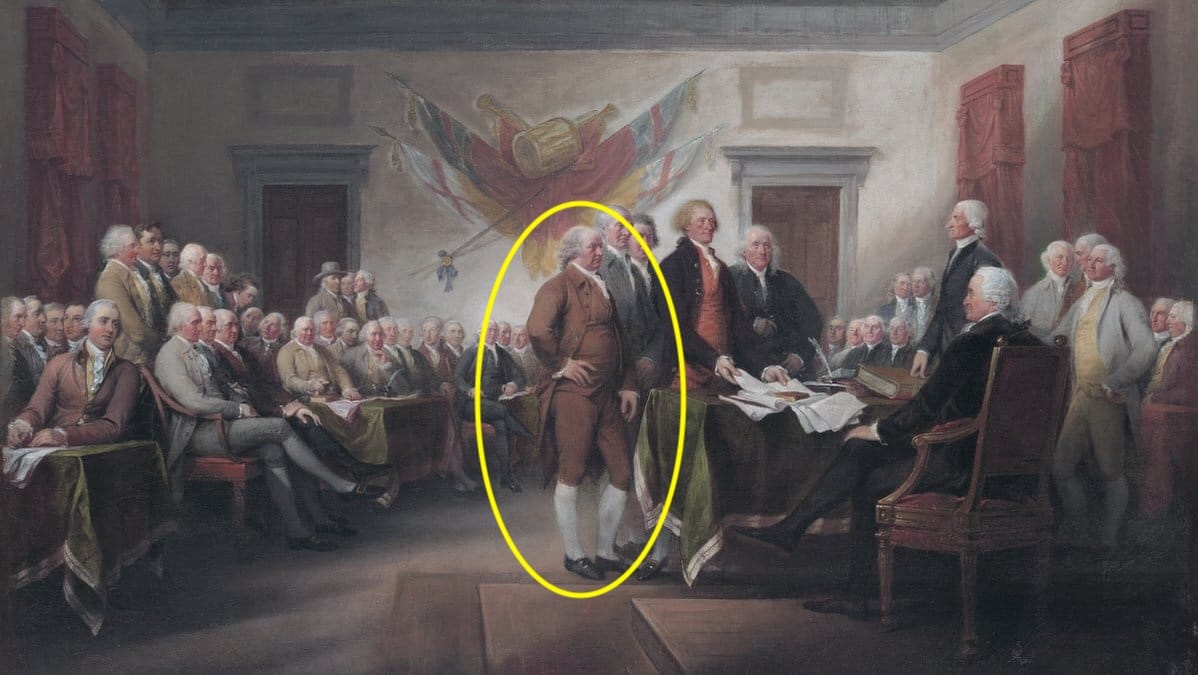
As America approaches its 250th birthday in 2026, it is time to recognize one of our most foundational figures: John Adams. Known as the “voice” of the Revolution, Adams’ contributions to American independence and governance shaped the early republic, leaving a monumental legacy still felt today. This anniversary is especially significant, as it also marks 200 years since Adams’ passing in 1826. Yet despite his enormous influence, there is no national memorial honoring him in Washington, D.C. For over two decades, Congress has authorized plans to construct a memorial that would pay tribute not only to John Adams but also to his family members who left their own indelible marks on American history. While the vision of the Adams Memorial has faced repeated delays, this milestone anniversary offers a powerful opportunity to honor the family’s legacy at long last.
Adams was more than a revolutionary; he was a statesman, diplomat, and deeply principled leader. If Washington was the sword of the American Revolution and Jefferson its pen, Adams was its voice, a stalwart advocate for independence long before many in the Continental Congress came around to the cause. He believed liberty from Britain was the only path forward and risked everything to argue for it. Adams was among the earliest voices calling for a formal Declaration of Independence, and his persuasive oratory helped unite colonies with starkly different interests and concerns under the common goal of freedom.
Yet Adams’ contributions went beyond his role in securing independence. He was one of the few Founding Fathers who also dedicated himself to securing the financial lifeblood necessary to sustain the Revolution. As a diplomat in Europe, Adams negotiated critical loans from the Netherlands, providing resources that allowed the American forces to continue their fight. Adams also helped establish America’s first diplomatic relationships, securing recognition of the United States in a world dominated by monarchies. His ambassadorial work in France, the Netherlands, and later Great Britain cemented America’s standing and helped lay the foundation for American foreign policy.
Adams was a man of principle, often at odds with his peers for his refusal to compromise on key issues. He was an ardent opponent of slavery, never owning slaves and expressing moral objections to the institution, though he stopped short of joining the abolitionist movement. This commitment to justice carried forward to his son, John Quincy Adams, who would become one of the most outspoken anti-slavery voices of his time. John Quincy’s post-presidential career in Congress, where he argued for freedom and equality, and his work defending the Africans in the Amistad case make clear the family’s dedication to the ideals of liberty and justice.
Abigail Adams, an essential part of this legacy, was a revolutionary figure in her own right. Through her letters and ideas, she advocated for women’s education and legal rights, famously urging her husband to “remember the ladies” as he worked on founding principles for the new government. Abigail’s writings offer invaluable insights into the political and social atmosphere of the Revolutionary period, and her influence on John was significant in shaping his policies and views. Much of the public’s understanding of John and Abigail’s remarkable partnership was brought to life through David McCullough’s widely acclaimed biography, John Adams (2001), which won the Pulitzer Prize and revived popular appreciation for Adams’ life and contributions. McCullough’s work, which inspired an enthralling HBO miniseries, gave new audiences insight into Adams’ sacrifices, character, and devotion to the founding ideals of the republic.
The Adams legacy extends further through John Quincy’s son, Charles Francis Adams, Sr., who served as a diplomat during the Civil War and worked to prevent British support for the Confederacy. Charles’s two sons, Henry and Brooks Adams, continued the family tradition of public service and intellectual contribution, with Henry emerging as a respected historian and Brooks as an influential academic. Together, the Adams family represents a multi-generational commitment to public service, justice, and intellectual achievement that has deeply enriched American history. Indeed, few families in American history even begin to approach the contributions of the Adams’.
Yet despite the family’s extraordinary contributions, the Adams Memorial has been a slow-moving vision, initially authorized by Congress in 2001 and delayed numerous times. Congress first passed a bill to establish a “commemorative work…to honor former President John Adams and his legacy” on November 5, 2001. The idea was to recognize John Adams alongside the family members who made significant contributions to American life and governance, with a focus on John, Abigail, and John Quincy Adams. Congress authorized the Adams Memorial Foundation to oversee the project, allowing the foundation to raise private funds for construction on federal land in Washington, D.C.
Although Congress has reauthorized the project multiple times, including a 2019 renewal that created the Adams Memorial Commission, the memorial still awaits completion. The Commission, comprising Congressional appointees and civilians chosen by the President, has made renewed progress this year, with a full slate of members appointed, including Commissioner Jackie Gingrich Cushman (daughter of former House Speaker Newt Gingrich) as Chairman and Major General Peter Cooke as Vice Chairman. The Commission now oversees site selection, design, and permitting, while the Adams Memorial Foundation, reestablished as a nonprofit, takes on the task of raising awareness and private funding.
The need for public support remains critical. As the Commission prepares its first report, scheduled for the end of 2024, the goal of completing the Adams Memorial by 2026 may be challenging, but is achievable. Public backing—through donations and advocacy—can help the memorial achieve its vision, celebrating not only the foundational contributions of John Adams but also the continuing legacy of justice, equality, and public service exemplified by the Adams family.
Of course, no discussion of John Adams is complete without acknowledging his more controversial actions, particularly the Alien and Sedition Acts. Passed during a period of tense foreign relations and domestic unrest, these acts were intended to safeguard the young nation but ultimately limited freedom of expression—a value Adams himself cherished. This blemish on his record reflects the challenges and complexities of leading a fledgling nation in unstable times, but it does not define his legacy. Instead, it serves as a reminder of the challenges faced by our Founders in navigating the uncharted waters of democratic governance. While there are criticisms that may be levied against Adams—particularly regarding his presidency—he remains extremely deserving of this type of national recognition, just as Lincoln’s suspension of habeas corpus does not negate his broader, positive impact.
Today, Washington and Jefferson are celebrated as heroes of the Revolution, while Adams often stands in the shadows, remembered for his disagreements with contemporaries or for policies that did not withstand the test of time. Yet Adams’ courage, his commitment to justice, and his contributions to American independence and governance make him just as deserving of a place of honor in our nation’s capital. The Adams Memorial, if completed, would stand not only as a tribute to the family’s contributions but also as a testament to the enduring ideals of liberty, justice, and principled leadership that have shaped our nation.
As we approach 2026, let us honor the sacrifices, vision, and resilience of John Adams and his family by finally giving them the memorial they deserve. The Adams Memorial would remind us of the enduring values upon which America was built, celebrating not only the remarkable contributions of John Adams but also the steadfastness of Abigail, the abolitionist fervor of John Quincy, and the continuing dedication of later Adams generations. In commemorating their legacy, we seize a powerful opportunity to bring John Adams out from the shadows of history and into the light of our national remembrance.
Michael J. Hout is the Editor of Liberty Affair. He currently resides in Warsaw, Poland. Follow him on X: @michaeljhout