How Musk and DOGE Are Dismantling Washington’s Bureaucracy—And Winning
Eccentricity has long been a quintessential American trait—and a positive one at that. What sets the United States apart is its willingness to overlook human quirks in favor of raw talent, ingenuity, and intelligence. Historically, America has embraced iconoclastic innovation, from the bipartisan Truman Committee to the Manhattan Project, rallying brilliant minds from all walks of life to advance the nation’s interests.
This bold, innovative spirit flourished in postwar California, where pioneering entrepreneurs like William Shockley, the “traitorous eight” behind Fairchild Semiconductor, and Intel co-founders Robert Noyce and Gordon Moore revolutionized transistor and integrated-circuit technology. Their meritocratic approach laid the foundation for future generations of hardware and software entrepreneurs, focused not on bureaucracy but on building efficient, results-driven systems.
The Rise of the Administrative State and the Decline of Innovation
Since the 1970s, while median wages have stagnated, an explosion of federal regulations has stifled innovation across industries—except for computing and the internet. As Peter Thiel has pointed out, the world of atoms has stalled due to crippling regulation, making breakthrough advancements in energy, biomedical research, and transportation nearly impossible.
Despite this, the 1980s and 1990s ushered in periods of competence, optimism, and economic growth, thanks to the consumer internet and computing revolutions. Even after the 2008 financial crash, the smartphone revolution, cloud computing, and big data propelled the U.S. forward while much of Europe and Japan stagnated.
This cultural divide between Silicon Valley and Washington, D.C. only widened. In Silicon Valley, entrepreneurs focused on creating value and disrupting inefficiencies, while the bureaucratic machinery in D.C. remained bogged down by process-oriented red tape. The only reason tech thrived was that it narrowly avoided the regulatory chokehold that had suffocated other industries.
The Administrative State’s War on Tech Entrepreneurs
The Cold War-era administrative state was once highly competent—but that era is long gone. Since 2012, an influx of ideological loyalists has weaponized government agencies and media narratives to target tech entrepreneurs, the last bastion of meritocracy, risk-taking, and optimism.
Their fear? That the success of self-made innovators—who prioritize results over credentials—could one day challenge establishment control.
The 2024 Political Realignment: Trump, Musk, and the Tech Revolt
When Donald Trump took control of the GOP in 2016, it signaled the rise of an anti-establishment movement—one that Silicon Valley outsiders like Peter Thiel recognized early on. By 2024, that movement had fully matured into a powerful coalition, driven by growing resistance to runaway inflation, government overreach into AI and crypto, and the increasing weaponization of federal agencies.
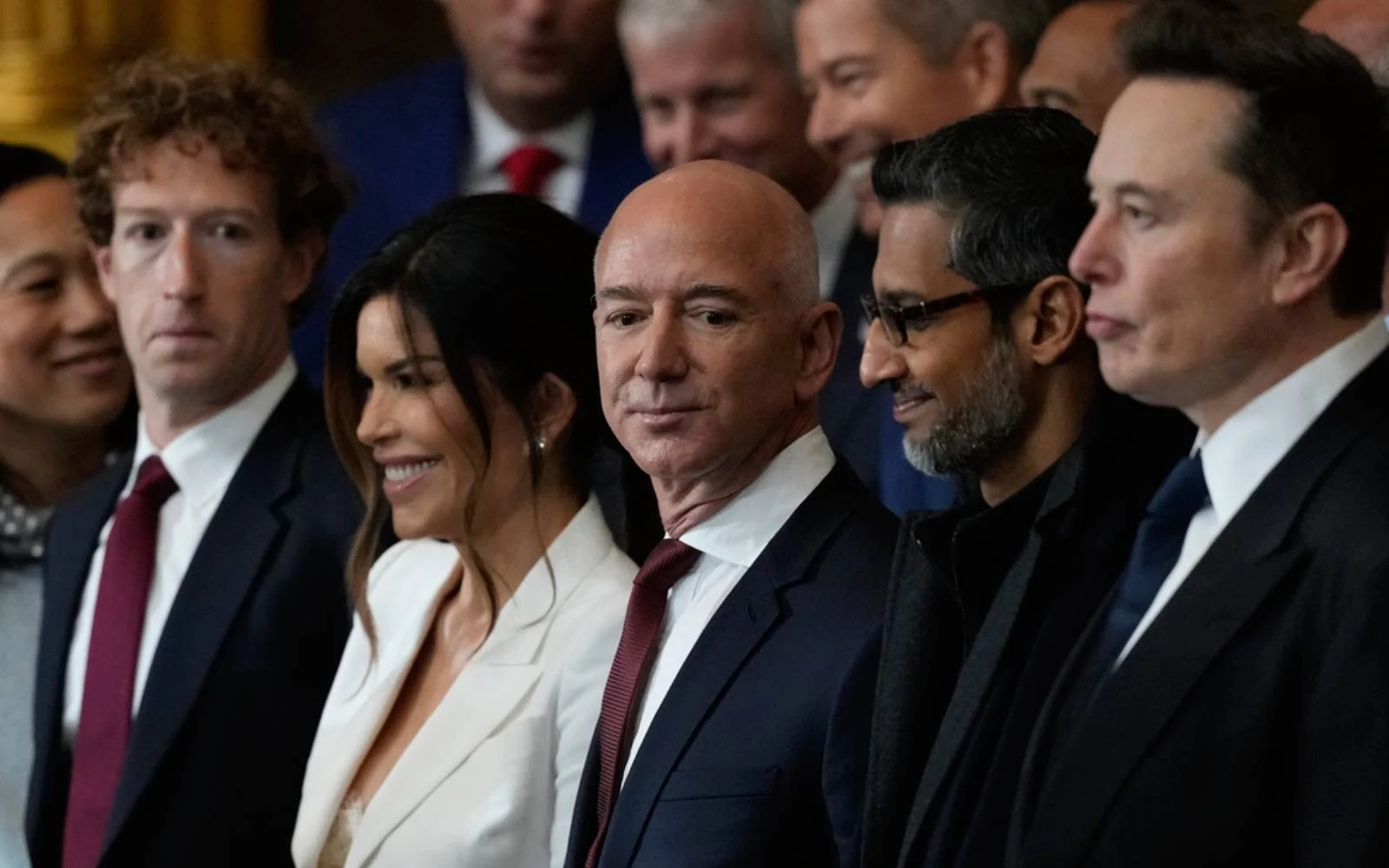
This backlash against credentialism and bureaucratic inefficiency brought together Trump and Elon Musk, uniting them with a wave of influential tech leaders, including JD Vance, Vivek Ramaswamy, Chamath Palihapitiya, Ben Horowitz, Marc Andreessen, Jacob Helberg, Joe Lonsdale, and David Sacks. Many not only endorsed Trump but actively campaigned on his behalf.
With JD Vance as vice president and Musk, Helberg, and Sacks taking key roles in the administration, a true meritocratic shake-up has begun.
DOGE: The Department That’s Changing Everything
One of the first major moves of this new administration was the establishment of the Department of Government Efficiency (DOGE)—a bold initiative to slash government waste, eliminate bureaucracy, and enforce accountability.
From day one, the mandate was clear:
• Not just incremental fixes—deep, meaningful cuts
• A $2 trillion reduction in government bloat
• Eliminating unnecessary jobs, spending, and regulations
Marc Andreessen, serving as an advisor to the transition team, noted that federal buildings were operating at only 25% capacity—a damning statistic that revealed just how little government employees actually work.
Supreme Court Victory: Ending the Chevron Deference
On June 28, 2024, just months before the election, the Supreme Court overturned the Chevron Deference, a doctrine that had granted federal agencies unchecked power to reinterpret laws to suit their political agenda.
The DOGE team immediately leveraged this decision to strip regulatory agencies of their overreach, dismantling arbitrary bureaucratic control that had stifled businesses for decades.
DOGE’s Hiring Strategy: A Meritocratic Revolution
One of the most radical aspects of DOGE has been its hiring practices. Instead of career bureaucrats, the department is staffed primarily with young professionals aged 19–25—many recruited straight out of tech companies and universities.
To government elites, this is scandalous. To Americans, it’s common sense.
For decades, government hiring has been gatekept by credentialism—favoring Ivy League degrees over actual competence. DOGE flips that model, embracing raw talent and a results-driven approach that mirrors the private sector.
The Accountability Era: Exposing Government Waste
With the rise of DOGE, public scrutiny of government agencies has reached an all-time high. Almost daily, citizen journalists—and at times even Elon Musk himself—unveiled new examples of incompetence and corruption within institutions that had long been considered untouchable. Reports surfaced about USAID funding a cement factory for Hamas, while other agencies, including the Department of Labor and the Centers for Medicare & Medicaid Services, were found to be riddled with inefficiencies.
Even regulatory strongholds like the SEC and CFPB are facing major shake-ups.
DOGE’s Impact: A New Standard for Government
DOGE is demonstrating that government can be run efficiently, but only when it embraces the principles that drive top-performing private sector innovators. Instead of being weighed down by bureaucratic red tape, it has adopted a mission-driven approach, where transparency ensures accountability, and results take priority over rigid processes.
With Musk, Vance, and a wave of tech disruptors leading the charge, the U.S. government is being forced to compete with the efficiency and innovation of the private sector. This shift is not just reshaping Washington—it is setting a precedent that Western governments may soon have no choice but to follow.
Ziya H. is a Contributor for Liberty Affair. He lives in Warsaw, Poland. Follow him on X: @hsnlizi