Inheritance Taxes Are the Most Immoral Form of Taxation—It’s Time to End Them

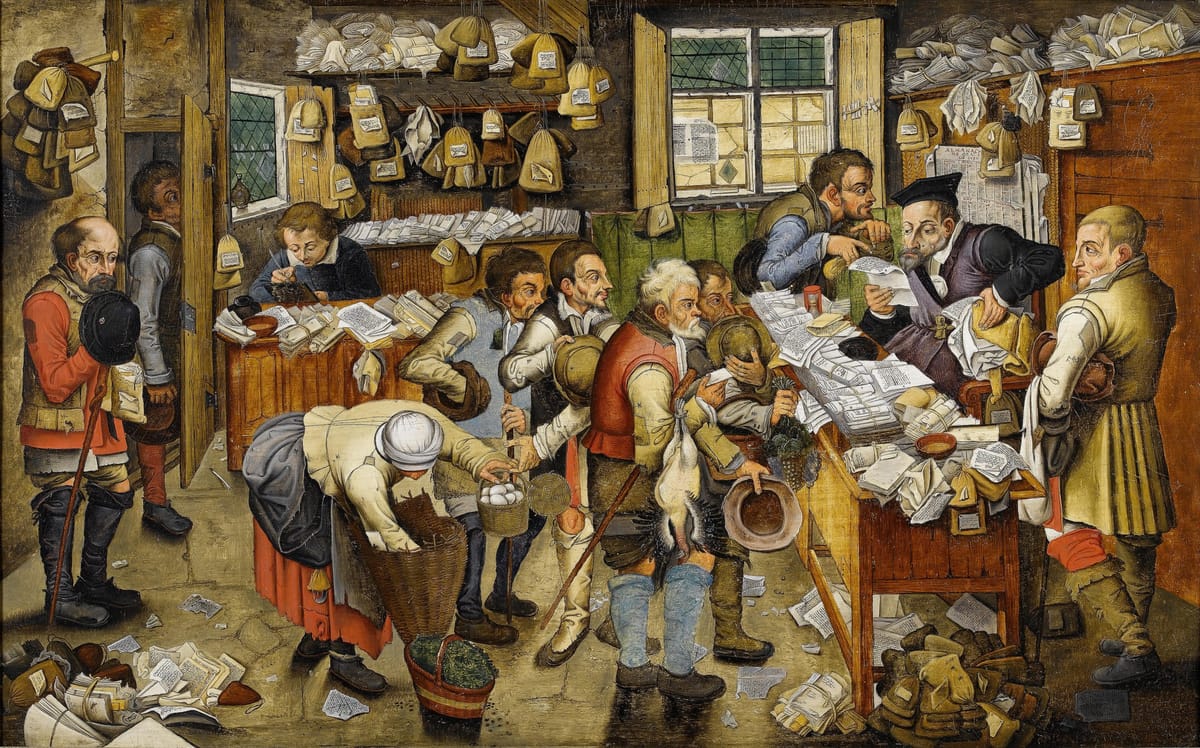
Recent events in the United Kingdom have cast a harsh spotlight on the issue of inheritance taxes. Thousands of farmers and landowners have taken to the streets of London, vehemently protesting the Labour government’s decision to impose a 20% tax on agricultural estates valued over £1 million, effective from April 2026. This policy threatens the survival of family-run farms—businesses often sustained for generations by grit, sacrifice, and hard work. For many, these farms are much more than assets; they are pieces of family history and a way of life. Heirs may be forced to sell ancestral lands simply to meet tax obligations (as often was the case in the 20th century with stately homes; Downton Abbey depicted the pressures of this period well). Such measures are not only economically destructive but also a profound moral failing. It is time for Western nations, including the United States, to reevaluate and ultimately abolish inheritance taxes.
The origins of inheritance taxes, once referred to as “death duties,” reveal their deeply controversial history. These taxes were initially introduced as a tool to break up large aristocratic estates and reduce inherited privilege, a notion that, to some, seemed aligned with democratic ideals. However, they have since morphed into a bureaucratic hammer, indiscriminately crushing small businesses, family farms, and the middle class. In the United States, the federal estate tax was established in 1916 during wartime, justified as a temporary measure to fund government expenses. Over a century later, it remains firmly entrenched, despite its harmful effects on families and communities. What was once framed as a way to democratize wealth now serves as an opportunistic grab at the lifeblood of families trying to preserve their legacies.
At their core, inheritance taxes are morally indefensible. They allow governments to act as vultures, swooping in to seize a portion of an individual’s life’s work at the moment of death. The government positions itself as entitled to a share of one’s legacy, as if the wealth left to children or grandchildren is public property rather than the fruit of private toil. Families are left to grapple not only with the loss of a loved one but also with bureaucratic demands that reduce their years of sacrifice to a taxable transaction. The state’s presumption—that it is owed a cut simply because an estate changes hands—is an affront to both individual liberty and human dignity.
The moral flaws of inheritance taxes are matched only by their economic destructiveness. They represent a form of double taxation, as the wealth in question has already been taxed—whether as income, capital gains, or property taxes—during the original owner’s lifetime. Taxing it again upon transfer to heirs is not only unfair but economically counterproductive. In many cases, these taxes force the liquidation of family assets to cover liabilities. Farms, in particular, are often illiquid, making it nearly impossible for heirs to pay the tax bill without selling land that has been in the family for generations. This breaks up farms, disrupts communities, and often leads to the erosion of local economies.
The disparities in inheritance tax rates across the globe underscore their arbitrary nature. In the United Kingdom, a 40% tax rate applies to estates above £325,000, with certain reliefs for agricultural and business properties. In the United States, the federal estate tax rate is similarly 40% for estates exceeding $13.61 million in 2024, though spousal exemptions and portability provide limited relief. Across Europe, rates vary widely. Belgium imposes rates as high as 80%, while nations such as Sweden and Austria have abolished inheritance taxes altogether. In Asia, Japan enforces one of the highest rates globally at 55%, while countries like India impose no inheritance tax at all. These inconsistencies reflect how such taxes are shaped by political expediency rather than sound economic or moral principles.
Prominent thinkers have long debated the role of inheritance taxes, offering starkly contrasting views. Friedrich Hayek argued that wealth redistribution through taxation infringes on individual liberty and discourages the ambition and creativity that drive economic progress. Milton Friedman critiqued inheritance taxes for disincentivizing savings and investment, two pillars of long-term prosperity. Conversely, Thomas Piketty (who this author had the opportunity to meet when he gave the Gamble Memorial Lecture at UMass Amherst in 2014) insists that inheritance taxes are crucial for addressing wealth inequality, while Joseph Stiglitz (Amherst College '64... seeing a pattern?) contends that such taxes can fund essential public goods. While proponents of inheritance taxes focus on their potential to reduce inequality, they ignore the human cost and economic inefficiencies that disproportionately harm middle-income families who lack the means to navigate legal loopholes.
Governments often justify inheritance taxes by framing inheritances as unearned windfalls, akin to lottery winnings. This perspective ignores the reality that most inheritances result from decades of hard work, frugality, and strategic planning. Far from being “lucky,” the heirs of small business owners and farmers often inherit not just wealth but also responsibilities: to sustain businesses, manage properties, and preserve family legacies. Treating these inheritances as mere windfalls undermines the values of diligence, prudence, and responsibility that societies should be striving to promote.
The case against inheritance taxes is not just economic; it is philosophical. The notion that a government is entitled to a share of a family’s wealth simply because someone has passed away raises fundamental questions about the role of the state. Should the government act as a custodian of public goods, or should it intrude into the private, deeply personal affairs of families? Does the state view citizens as stewards of their own property, or merely as temporary holders of wealth that ultimately belongs to the collective? The very existence of inheritance taxes seems to answer these questions in the latter, more troubling direction.
As the protests in the United Kingdom demonstrate, the imposition of inheritance taxes can lead to widespread unrest and economic uncertainty. The farmers marching in London are not clinging to wealth out of greed; they are defending their heritage, their livelihoods, and their right to pass on what they have built. Their struggle mirrors that of countless families worldwide, whose futures are threatened by policies that prioritize revenue over fairness.
Inheritance taxes are economically disruptive, morally questionable, and philosophically indefensible. They punish success, disrupt family enterprises, and represent an overreach of governmental authority into deeply personal matters. Abolishing these taxes would honor individual liberty, promote economic stability, and uphold the sanctity of family legacies.
The burden of inheritance taxes is becoming increasingly apparent, and Western nations must chart a new course. Eliminating these taxes is not merely a matter of economic efficiency; it is a question of moral clarity and justice. By doing so, we can foster societies that respect family heritage, reward hard work, and secure a prosperous future for generations to come.
Michael J. Hout is the Editor of Liberty Affair. He currently resides in Warsaw, Poland. Follow him on X: @michaeljhout