James Comey Indicted on Federal Charges of False Statements and Obstruction

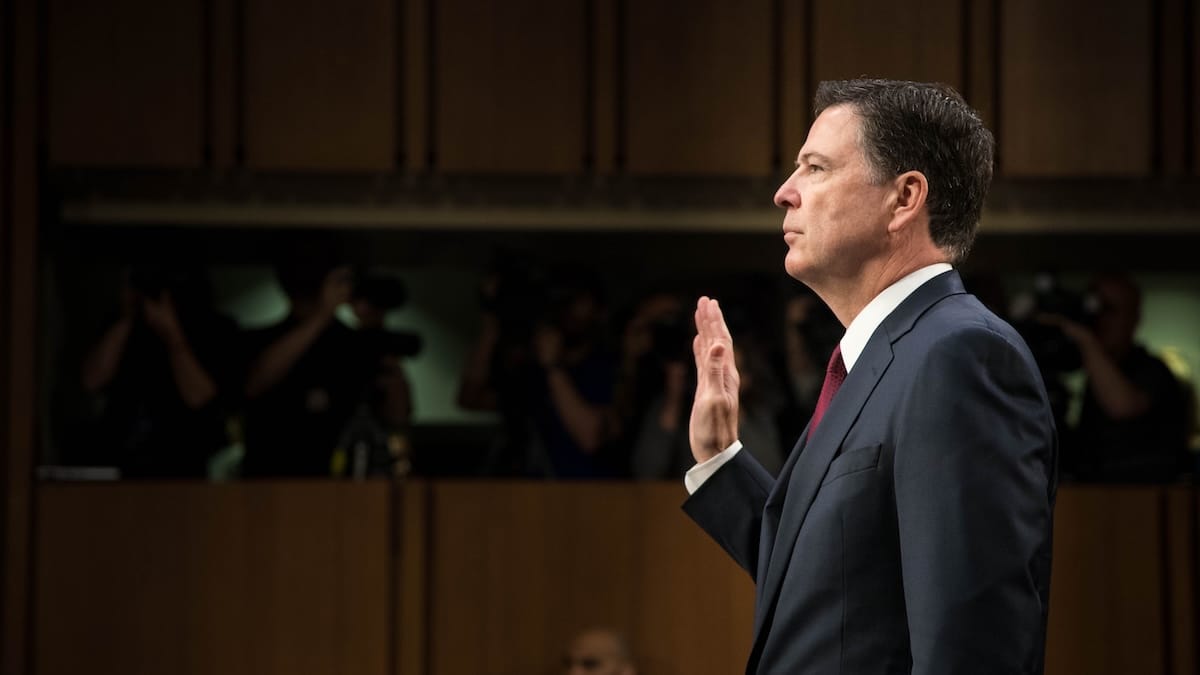
Former FBI Director James Comey has been indicted by a federal grand jury in the Eastern District of Virginia on charges of making false statements to Congress and obstructing a congressional investigation. The indictment was unsealed Thursday and signed by U.S. Attorney Lindsey Halligan, who was appointed to her role earlier this year.
The case focuses on testimony Comey delivered to the Senate Judiciary Committee in September 2020. Prosecutors allege he misled lawmakers when asked if he had authorized subordinates to serve as anonymous media sources during the FBI’s Russia investigation. According to the indictment, he later took steps that interfered with congressional oversight into the bureau’s handling of those disclosures.
The two counts—brought under statutes covering false statements and obstruction of a congressional proceeding—carry potential prison time of up to five years each. Although prosecutors considered a third charge, the grand jury returned only two counts.
The timing of the case has drawn attention. President Trump had recently renewed calls for Comey and other former officials to face accountability for their handling of the Russia probe. The indictment was returned just weeks before the statute of limitations on the alleged false statements was set to expire.
Comey denied wrongdoing in a video posted to social media shortly after the indictment was announced. He characterized the case as politically driven but insisted he would fight it in court. “We will not live on our knees,” Comey said, adding that he trusts the judicial process to vindicate him.
The fallout has already reached inside the Justice Department. Within hours of the indictment, Comey’s son-in-law resigned from his post as a federal prosecutor in Virginia, citing his “oath to the Constitution” as the reason he could not continue.
The indictment also highlights divisions within the U.S. Attorney’s Office. Reports indicate that Halligan’s predecessor had previously declined to bring charges earlier this year, a decision that shifted after new leadership took over.
Legal analysts note that cases involving false statements to Congress can be difficult to prove. Prosecutors must establish not only that the statements were false, but that Comey knew they were false and that they were material to the investigation. The obstruction count will likewise require evidence that he intended to hinder lawmakers’ oversight responsibilities.
For conservatives who have long argued that Comey embodied the FBI’s politicization, the indictment is overdue. His leadership during the FBI’s handling of both the Clinton email probe and the Russia investigation drew years of criticism and accusations of bias, especially from Republicans. Critics say those controversies eroded public trust in federal law enforcement and revealed double standards in how political figures were treated.
Comey’s arraignment is expected next week in Alexandria, Virginia. If convicted, he could face fines and prison time, though sentencing would depend on federal guidelines and judicial discretion.
The indictment ensures that questions about Comey’s conduct—raised for years by congressional Republicans and conservative watchdogs—will now be tested in a courtroom rather than in political debates alone.
Michael J. Hout is Editor-in-Chief of Liberty Affair. Based in Warsaw, Poland, he writes about politics, culture, and history. Follow his latest insights on X: @michaeljhout.