Making Things Is Moral: Trump, J.D. Vance, and the Return of American Greatness

In the early 2020s, the United States confronted a paradox that revealed the fragility of its economic model: record-high stock market valuations and record-low national confidence. Americans were told they lived in the most dynamic economy on Earth, even as entire towns hollowed out, strategic supply chains faltered, and the country’s ability to build anything of consequence seemed to diminish. Semiconductors were outsourced, infrastructure projects stalled, and shipyards faded from relevance. The much-lauded economy of ideas no longer felt fully grounded in the physical capacities that once powered American strength.
Enter the Trump-Vance industrial policy, a new—or perhaps renewed—vision for the American economy. It’s not a return to Reaganism, nor a replica of New Deal intervention. It’s something else entirely: a synthesis of economic nationalism, technological ambition, and moral clarity. It seeks not to oppose the innovations of recent decades, but to anchor them in a national project that restores productive capacity and economic dignity.
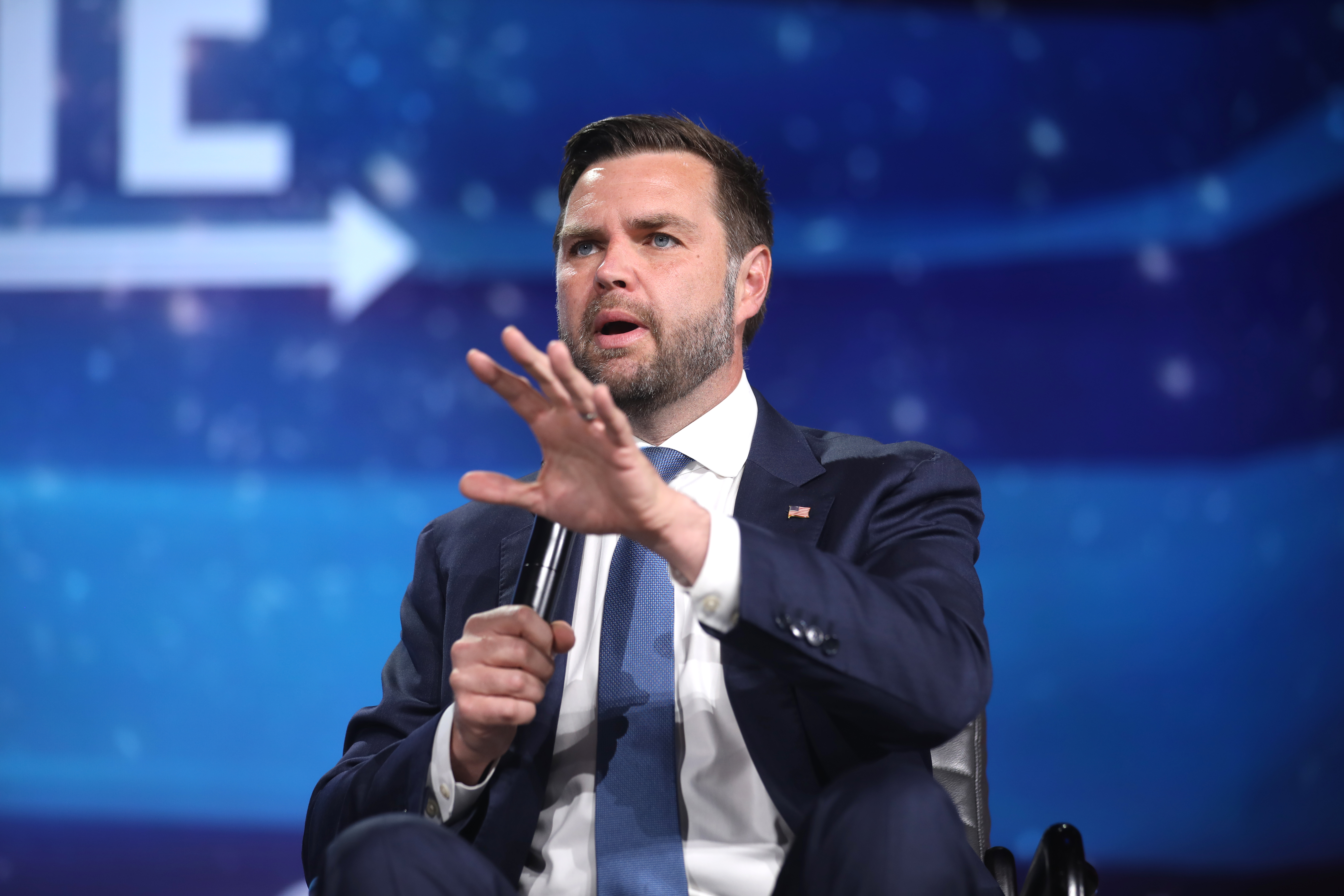
The clearest expression of this new approach came from Vice President J.D. Vance at the American Dynamism Summit. Speaking to an audience of technologists, investors, and policy thinkers, Vance laid out more than a speech—he offered a framework: a way to align the populist demand for meaningful work with the entrepreneurial drive to build and innovate.
Instead of dividing these constituencies, Vance invited them to see themselves as allies. Both have been underserved by a system that offshored production, prioritized short-term efficiencies, and lost sight of national resilience. From this recognition, he charted a path forward, grounded not in nostalgia, but in the difficult, necessary work of rebuilding.
The Morality of Work in the Age of AI
The Trump-Vance vision is not only economic—it is moral. Work, in this worldview, is a form of human participation in something greater than oneself. In Laborem Exercens (1981), Pope John Paul II wrote: “Through work man must earn his daily bread and contribute to the continual advance of science and technology and above all to elevating unceasingly the cultural and moral level of the society within which he lives.” An economy that supports this vision is not just efficient, it is just.
In this light, technology is not an adversary to labor but its natural partner. Vance pointed to the "ATM effect" not as a cautionary tale, but as a model. By automating routine transactions, banks were able to redeploy human talent to higher-value services, improving both customer experience and workforce quality. This principle extends across the economy: AI, robotics, and data tools can augment the worker, not replace him. A machinist with smarter tools becomes more skilled. A logistics operator using AI routing works faster and more precisely. In a properly designed system, innovation becomes a force multiplier for human potential.
The Vanishing Arsenal
America’s manufacturing shortfall is not theoretical—it’s physical. During World War II, the U.S. produced three ships every two days. Today, it produces five commercial ships per year. A country that once armed the free world now accounts for just 0.1% of global shipbuilding. This is not simply about industry; it’s about imagination, coordination, and courage.
A major cause of this decline was the assumption that design and manufacturing could be permanently decoupled—that America would invent, and others would build. But the great manufacturing nations of today—South Korea, Germany, China—have shown the reverse: mastery of production fuels mastery of innovation. Creativity is not abstract. It emerges from friction, from iteration, from proximity to the materials and methods that shape the real world.
What undermined this was the easy promise of cheap labor, both imported and offshore. But low wages are not a sustainable competitive advantage. They discourage automation, slow productivity, and breed complacency. By contrast, when labor is valued, innovation accelerates to support it.
Tariffs, Automation, and the New American Model
The Trump-Vance approach is pragmatic, not ideological. Its goal is to recalibrate the levers of policy—trade, energy, taxation—to restore industrial capacity and national strength.
First, tariffs. For decades, America championed free trade as a universal good. In practice, it enabled dependency on strategic rivals and eroded domestic production. Targeted tariffs now serve to correct imbalances, rewarding countries that play fair and encouraging reshoring of critical industries.
Second, energy. America’s natural energy abundance is not just an asset—it’s a strategic lever. From LNG to nuclear to advanced fracking, the ability to produce cheap, reliable power underpins a manufacturing revival. Combine that with automation and next-gen robotics, and American labor becomes globally competitive without a race to the bottom on wages.
Results are already emerging. The auto industry added 8,900 new jobs in February. Honda, Hyundai, and Stellantis all announced new U.S. production. With unlawful border crossings down by 94%, the bulk of those jobs are going to American citizens. On the capital side, full expensing of R&D and equipment has triggered an investment boom. Plans are in motion to expand these incentives to factory construction—making physical industry a smart bet again.
And despite concerns about inflation, these reforms have coincided with disinflation. Core CPI is now at its lowest level since 2021. Manufacturing, which shed 100,000 jobs the prior year, added over 10,000 in the last quarter alone.
Tax the Foreigners, Not the Workers
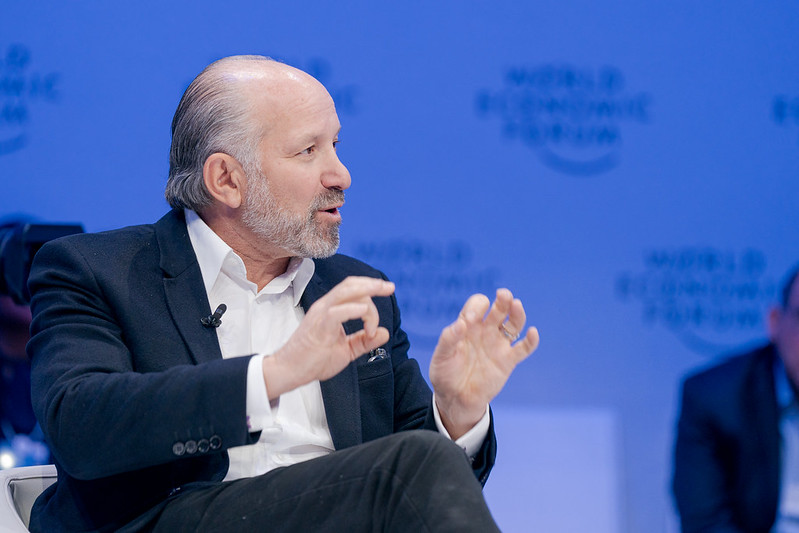
A particularly audacious component of this policy framework comes from Secretary of Commerce Howard Lutnick. Drawing on historical precedent and financial realism, Lutnick has proposed a return to what he calls the "external revenue" model—the system under which America functioned before 1913, when tariffs, not income taxes, funded the federal government.
Under his proposal, the bulk of federal revenue would be drawn from tariffs on foreign entities selling into the U.S. market. American citizens earning under $150,000 annually would be exempt from federal income taxes. Rather than penalizing domestic work and investment, the tax burden would shift outward—onto those who profit from access to the American consumer base without contributing to its economic foundation.
The logic is powerful. Tariff-based revenue encourages domestic production, reduces deficits, and restores incentives to work, produce, and invest within the country. It’s the model that helped build the transcontinental railroad, finance the Civil War, and transform a young republic into the industrial leader of the world. The question is no longer whether it can work—it’s whether we have the vision and discipline to make it work again.
Combined with aggressive cost-cutting and strategic budgeting, Lutnick’s approach offers a blueprint for fiscal rebalancing and middle-class revival. But more than that, it represents a deeper shift: away from taxing effort, toward taxing access. Away from subsidizing erosion, toward rewarding renewal.
A New Synthesis: Populists and Builders
The most surprising argument in Vance’s speech wasn’t economic—it was political. He called for a coalition between two groups long seen as antagonists: the populist right and the technology elite.
Traditionally, these camps mistrusted each other. One saw the other as aloof; the other as resentful. But Vance suggested that both have been sidelined by a bureaucratic class that privileges stasis over progress.
Populists want dignity. Builders want permission to build. The enemy is neither group—it is a culture of inertia that says neither dream is possible.
But in truth, they want the same thing: a country that works. And that’s already beginning to emerge. Defense tech startups, chip fabs, and infrastructure projects are breaking ground across America. If the moral clarity of the populists merges with the technical brilliance of the builders, they may together define a new era of American dynamism.
Conclusion: The Moral Economy
What Trump and Vance are offering is not just a policy agenda—it is a moral framework. One in which work is honored. Where technology elevates rather than replaces. Where nations are judged not by what they consume, but by what they create. Where economic achievement is measured not by stock tickers, but by what kind of future it makes possible.
This is not a rejection of modernity. It is a reaffirmation of purpose. The resurrection of American dynamism, rooted in work, in creativity, and in the belief that to make is not only an economic act, but a moral one.
Ziya H. is a Contributor for Liberty Affair. He lives in Warsaw, Poland. Follow him on X: @hsnlizi