Northwestern’s “Toxic Masculinity” Programs Sound More Like Ideological Re-Education
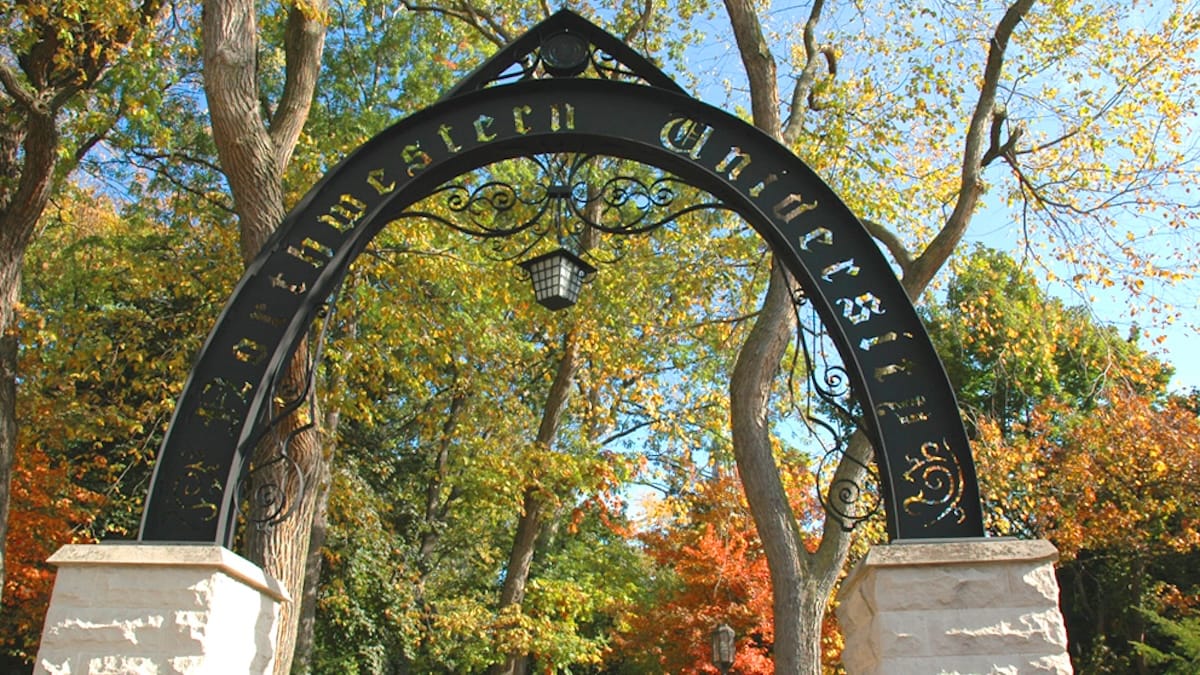
A department at Northwestern University, closely aligned with the school’s mental health and counseling services, is actively recruiting young men for a program designed to provide “education around masculinity in predominantly masculine spaces.”
The MARS program—short for Masculinity, Allyship, Reflection, Solidarity—claims to combat “rape culture” and “restrictive masculinity” while promoting so-called “healthy masculinity.” According to its website, MARS helps male students “form healthy self-images through exploration of masculinity” in a peer-led setting.

One of the program’s key figures is Said Hill, Ph.D., an advisor to MARS who has long been involved in similar initiatives at Northwestern. In an interview published a few years ago, Hill recalled his early work with the program:

“I had just moved to Chicago the year before and took a job at Northwestern University doing violence prevention and healthy masculinity work in their violence prevention department,” he told Division 51.
Hill went on to describe how he trains male students to lead anti-violence programming and masculinity retreatsacross campus and in the wider Chicago community. He also teaches a course on “deconstructing masculinity” as a form of violence prevention.
His stated goal?
“I just want all of us to feel free and liberated from the pressures of rigid gender norms,” Hill said.
But MARS isn’t the only program at Northwestern that treats masculinity as inherently suspect.
A DOJ-Funded “Re-Education” Camp for Men?
Northwestern’s NU Men program takes an even more direct approach. Launched in 2016—right after the university received a $300,000 “violence prevention” grant from the Department of Justice—NU Men trains male students to rethink their masculinity through a six-week workshop.
Each year, 12 male students are selected to explore their male identity as an “oppressive” force and to “describe the relationship between masculinity and violence.”
Paul Ang, the school’s Director of Men’s Engagement, described NU Men as:
“A masculinity dialogue group focused on providing men a space to explore, rethink, and challenge their own masculinity and learn about some of the systemic links between masculinity and violence.”
But what if a student doesn’t sign up voluntarily?
Northwestern allows students to anonymously “nominate” their peers for the program—meaning students can report classmates they deem to have “toxic masculinity.” According to the program’s website:
“If you would like to nominate a student to participate in NU Men, please use the nomination form, or email care@northwestern.edu directly. Please provide the student’s name, email, and whether or not you’d like the nomination to be anonymous.”
This sounds less like a self-improvement program and more like a bias response team for woke ideologues—one that allows feminists with a vendetta to tattle on male classmates for simply acting like men.
Students Learn to Loathe Their Own Masculinity
The NU Men program has already succeeded in molding students to its worldview.
David Gleisner, a member of the inaugural NU Men class, praised the program for helping him understand the “patriarchy.”
“It was a really good space to be able to share in those conversations that you normally wouldn’t have with other men—talking about emotions, talking about rape culture, talking about how masculinity relates to the patriarchy,” Gleisner told The Daily Northwestern.
The Bigger Picture
This is the future elite universities are trying to create—where masculinity is seen as inherently dangerous and young men are pressured to apologize for simply existing.
While Northwestern disguises these programs under the language of “allyship” and “reflection,” their underlying message is clear: Masculinity is a problem to be solved.
And with taxpayer-funded grants supporting these efforts, it’s a problem that’s only getting worse.
This report was brought to you by Toni Airaksinen, Senior Editor of Liberty Affair and a journalist based in Delray Beach, Florida. Follow her on Substack and on X @Toni_Airaksinen.