Peace Through Strength: Trump’s Strategic Victory over Iran

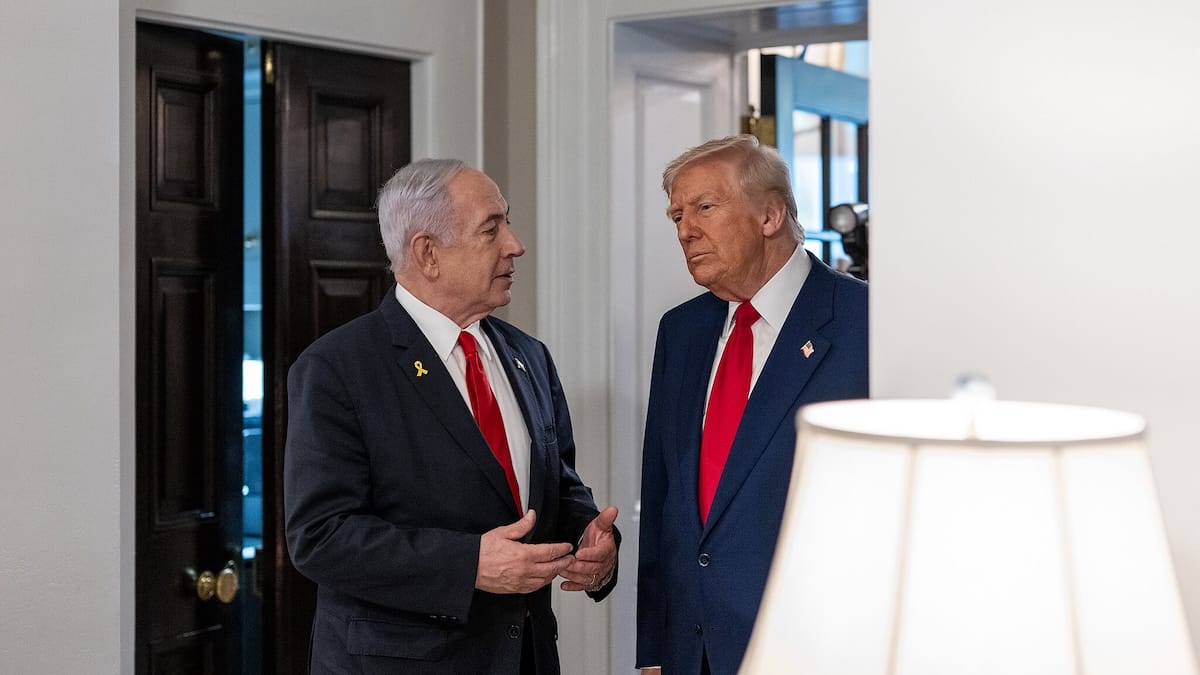
Over the past few weeks, the Middle East has been engulfed in one of its most dangerous escalations in years, as Israel and Iran exchanged strikes and the world watched anxiously for global fallout. Amid the turmoil, one unifying conclusion emerges: President Trump responded with strategic precision, restoring American deterrence and preventing broader escalation.
It began with Israel's Mossad-led Operation Rising Lion on June 13, when Israeli airstrikes—supported by top-tier U.S. intelligence—targeted Iran’s nuclear facilities at Fordow, Natanz, and Isfahan, killing at least 17 high-ranking IRGC generals and nuclear scientists, including Maj. Gen. Hossein Salami and Chief of Staff Maj. Gen. Mohammad Bagheri.
In a coordinated operation, Israel placed ominous calls to more than 20 senior Iranian commanders, warning them to flee or face imminent assassination—evidence of a campaign designed to decapitate the regime’s command structure.
Rather than stay on the sidelines, President Trump ordered precision strikes on these sites using B‑2 bombers and Tomahawks—what has been described as Operation Midnight Hammer—to degrade Iran’s nuclear capabilities directly.
Notably, multiple intelligence sources now suggest that Iran moved enriched uranium stockpiles and centrifuge components out of Fordow and Natanz shortly before the strikes. Satellite imagery showed minimal secondary explosions, and post-strike analysis indicates that critical material had been removed. This strongly implies that Iran had prior knowledge—or at the very least, strong suspicion—of incoming attacks and took steps to avoid a radiological disaster.
This move is highly significant. It signals that Iran was not preparing for escalation but actively working to minimize it. By removing radioactive materials in advance, Tehran protected its long-term nuclear capabilities while avoiding a pretext for massive retaliation. In essence, it was a quiet concession—one that underscores the pressure the regime felt under Trump’s looming strike force.
Critics claimed these strikes would destabilize the region or invite war. Yet, Iran responded not with sweeping retaliation but with a tight, coordinated strike involving missiles and drones, including a targeted attack on Al‑Udeid Air Base in Qatar—reportedly executed with advance notice to minimize casualties—suggesting Iran chose restraint over escalation.
Within hours, Trump brokered a 24-hour phased cease-fire, a masterstroke in leveraging strength to extract de-escalation.
Israel, for its part, managed to achieve major objectives while keeping broader war at bay.
The results are unmistakable. Trump’s doctrinal clarity—peace through strength—reversed years of wavering policy. Iran’s leadership structure lies in ruins. The country’s strategic calculus has shifted: provoking the U.S. now carries real consequences. European calls for diplomacy, and Russian warnings about “Pandora’s box,” rang hollow against America’s new posture.
Meanwhile, Democrats (and libertarians) in Washington and their media allies cry foul, decrying Trump’s actions as reckless or unauthorized. Yet they seem to forget that President Obama, President Bush, and President Clinton all ordered airstrikes and military operations abroad without explicit congressional approval when U.S. interests demanded it. The selective outrage now reeks of political opportunism. More troubling still is the apparent amnesia about the true nature of the Iranian regime—a regime that sponsors terror, persecutes women and minorities, and openly calls for the destruction of Israel. Trump has not forgotten. Neither should America.
Iran may still pose a threat. But after losing multiple top commanders—Salami, Bagheri, Shadmani, Mehrabi, Rabbani, and others—its leadership lacks cohesion.
Looking ahead, the path remains uncertain. Iran may regroup, or it may continue a quiet retreat. Israel’s readiness remains high, and U.S. forces are positioned to respond decisively to any renewed aggression. But one thing is clear: any further provocation will meet the same clarity, speed, and resolve that President Trump has already demonstrated.
In a tense era of global uncertainty, Trump’s bold and synchronized actions—in support of Israel, to secure U.S. assets, and to diminish Iran’s nuclear threat—restored American credibility and shaped a new balance through clarity and consequence.
That is leadership. That is deterrence. And in this pivotal moment, Trump reminded the world—and Tehran—that America does not hesitate when its interests and allies are under threat.
Michael J. Hout is Editor-in-Chief of Liberty Affair. Based in Warsaw, Poland, he writes about politics, culture, and history. Follow his latest insights on X: @michaeljhout.