Professor and UN-Recognized NGO Leader Praises Hamas’s ‘Pragmatism’ Post-October 7
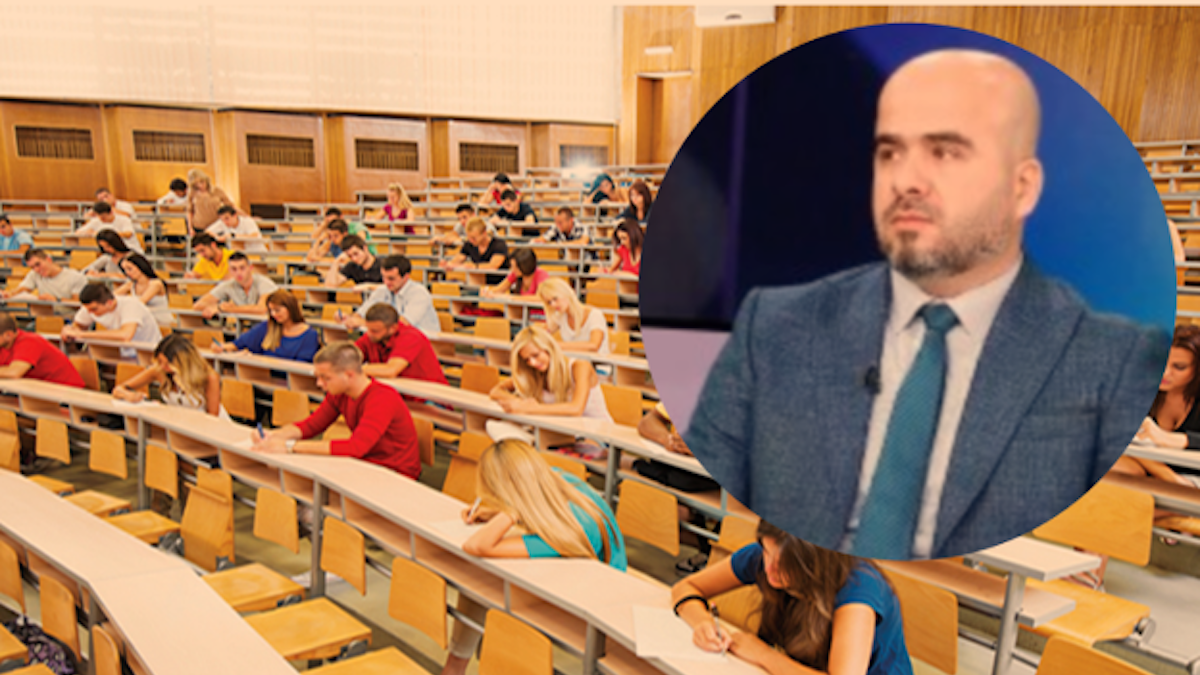
A professor at Lusail University in Qatar who also runs a United Nations recognized NGO recently praised Hamas for their surge in popularity and “pragmatism” after October 7, 2023, when Hamas killed over 1,200 Israelis and kidnapped over 250 innocent civilians.
The professor — Tarek Hamoud, who teaches political science across the Arab and British world — championed Hamas in a paper written for the new issue of the Journal of Palestine Studies, published by the University of California Press.
He argues that Israel's “failure” to recognize Hamas as the political leader of the Palestinian people has left them underestimated, causing Israel to be surprised by the October 7 attacks.
“Since 2007, Israel and regional governments have mistakenly clung to the containment strategy…This shortsighted approach has overlooked Hamas’s remarkable proclivity to adapt, and to respond with force” says Hamoud.
Further, he goes on to praise “Hamas’s distinct ability to adapt pragmatically to changing political dynamics around it since its founding in 1987.”
“Hamas must be understood as more of a network entity than a centralized, hierarchical organization. While it has its roots in the Muslim Brotherhood, its profound connectedness to Palestinian society today underscores its evolution into a robust armed resistance movement,” he states.
The Muslim Brotherhood believes that “Islam is the only solution.” The organization has been implicated as an actor or aggravating force in dozens of conflicts across the globe, as it has offshoots in countries as far away as Morocco, Sudan, Germany, and the United States.
“Moreover, Hamas has exhibited crucial adaptability since its founding in 1987,” he adds.
Hamoud admits that Hamas was not prepared for Israel’s counter-attack. The lack of forethought before the attack was due to the fact that “armed resistance is their core political ideology” and not necessarily governance or military-strategy, he explains.
Hamoud concludes by saying, essentially, that Hamas won’t stop using force and aggression. He foreclosed on any other possible method the Palestinians might have towards achieving a better life, like diplomatic negotiations or international cooperation.
“October 7 has shown that the more regional and global actors dismiss Hamas as an outlier that needs to be socialized, the more Hamas will respond with force against the status quo” Hamoud concluded.
Since October 7, Hamas has indeed experienced a surge in popularity among Arab and Muslim populations. In the West Bank, satisfaction with Hamas reportedly tripled to 85% after October 7, according to a Reuters report.
“Understanding Oct 7 Through Hamas’s Adaptability and Leadership Structure” was Hamoud’s debut academic article, a significant milestone for new professors. He earned his Ph.D at the elite UK school, the University of Exeter. He also is occasionally invited to the United States to speak at universities and think-tanks.
Earlier this month, Hamoud joined Alarby TV News, a Qatari outlet, to discuss Hamas. He is also the founder of the Palestinian Return Centre. His centre was granted special status under the United Nations as an NGO back in 2015. Hamoud’s Youtube videos have amassed over 2 million views combined.

About 97 hostages remain in Hamas captivity, including seven known Americans.
One of those, Judy Weinstein Haggai, is confirmed to be deceased, but her body has not been returned. Scholars remain worried that many of the Israelis kidnapped will die in captivity, if they haven’t already succumbed to starvation, cruel punishments, or worse.
As of this writing, 422 days have passed since those hostages were last seen.
Toni Airaksinen (@Toni_Airaksinen on X) is a journalist living in Delray Beach, Florida. If you want to stay on top of news regarding college antisemitism, please follow her on Substack, Twitter or Instagram.