She Was Fired for Antisemitism—Now She’s an Academic Gatekeeper
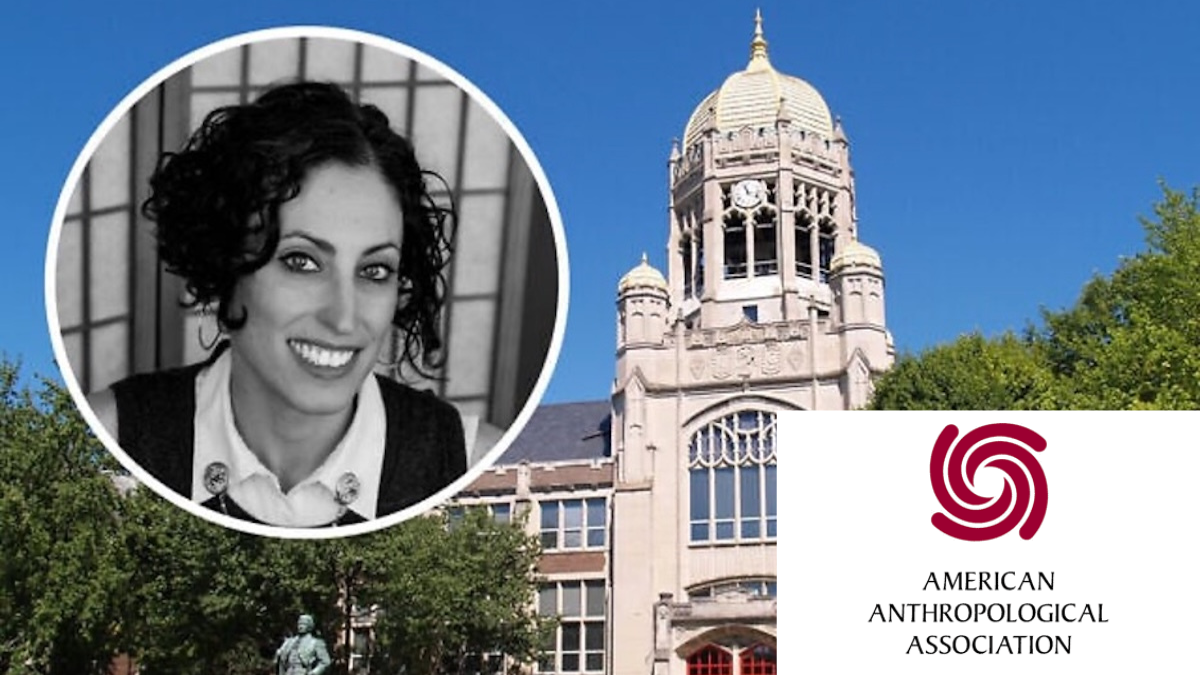
The first tenured professor to be fired for antisemitism, as I first reported here, has now secured a comfortable new role at one of anthropology’s most prestigious academic journals.
Maura Finkelstein, the subject of eight antisemitic incident reports at Muhlenberg University, was accused by students of pushing anti-Israel bias in class, mocking her school’s Hillel on Instagram, and even expressing that she was “heartbroken” over the Jewish organization’s presence on campus.
Hillel, founded in the late 1920s, was established to support Jewish students at a time when being Jewish was a liability on campus and Jews were seen as a threat to "white" students' academic opportunities.
Since her firing in 2024, Finkelstein pledged to appeal her termination, but those efforts appear to have been unsuccessful. Instead, she has taken her anti-Zionist and anti-Israel sentiment to the American Anthropologist, the flagship journal of the American Anthropological Association (AAA), where she now serves as an Associate Editor, overseeing the publication of academic research.

Finkelstein’s Controversial Views
In a recent post, Finkelstein urged fellow anthropologists to support the Palestinian cause, declaring that the AAA is taking the issue seriously.
“We anthropologists know a lot about power. We study it in the field, we read about it in our theory books, we encounter it in the institutions where we work. And we reckon with our own complicity in these institutions of power every few decades. Right now, anthropology is having a reckoning, and that reckoning is Palestine.”
“Right now, we owe Palestine our voice and our platform. What is our anthropology for, if not for this?”
Why Was Finkelstein Fired?
The Department of Education (DOE) intervened at Muhlenberg after eight students lodged formal complaints against Finkelstein, alleging anti-Israel bias and antisemitic behavior. She was reportedly seen photographing a fundraising table for Israel’s war effort inside the campus Hillel for unexplained reasons.
Finkelstein claims she was fired for retweeting a “poem,” but the complaints against her paint a more damning picture.
One student detailed Finkelstein’s classroom rhetoric:
"I have her for [class]... when the news broke about the Hamas invasion of Israel, Maura Finkelstein sent out an email to her classes saying that American news is biased and to read/watch the news sources she sent to us in order to understand the conflict going on in Israel."
"As a Zionist and American Jew planning to move to Israel and become a citizen, I felt beyond uncomfortable and was too anxious to even go to class. We spent almost the whole class discussing the topic and almost no time on class material."
Another student report cited a disturbing Instagram post Finkelstein made:
“Students raising money for genocide. Grief won’t be extinguished by revenge—ceasefire now; stop the ethnic cleansing of Palestinians, never again means never again for ANYONE!”

This post prompted additional complaints, with Jewish students stating that Finkelstein’s behavior made them feel unsafe on campus. Since she taught in the same building as the Hillel, tensions escalated, leaving many students feeling unwelcome in a space meant to provide community and support.
Student Complaints and DOE Investigation
Muhlenberg University faced increased scrutiny when the DOE became involved, launching an investigation into Finkelstein’s behavior. One student explained that “many of the students in Hillel were profoundly affected by the ongoing conflict and the professor’s post created the perception of a direct targeting of the Jewish community on campus.”
Despite Finkelstein being Jewish herself, Jewish students continued to file reports against her, claiming she was making them feel targeted and uncomfortable.
The fact that eight formal complaints were filed against her raises serious questions. While some might argue that this number isn't large, it is highly unusual for students to formally report their professors to the administration. Typically, students express dissatisfaction informally rather than taking official action, making the volume of complaints significant.
What’s Next for Finkelstein?
Finkelstein has not retreated from public discourse. Instead, she has become more vocal, appearing on podcasts, writing essays, and posting inflammatory remarks online.
She has tweeted statements such as:
“Just a reminder: If you do not support resistance, you have internalized the logics of white supremacy.”
“500 days of genocide. The only way forward is the complete dismantling of the Zionist entity and the eradication of Zionism. Free Palestine, from the river to the sea.”

Free Speech Debate
The Foundation for Individual Rights and Expression (FIRE) has expressed concern over Muhlenberg’s decision to fire Finkelstein, arguing it may have violated her contractual protections under tenure.
"Universities must not violate tenure lightly, especially when the incidents in question involve political speech made off-campus on a matter of public concern," wrote Graham Piro of FIRE.
"Free speech principles dictate that political speech warrants the greatest level of protection. The burden is on Muhlenberg to publicly demonstrate exactly what Finkelstein did to warrant such an extreme measure. The college's silence so far suggests it can't meet this high standard."
"Universities typically revoke tenure only in cases of egregious faculty wrongdoing. Harvard University, for example, moved toward revoking tenure for a professor at its business school who was accused of serious data fraud. This was an unprecedented move for the university: The Harvard Crimson does not identify another case of Harvard revoking a professor's tenure since the 1940's," Piro added.
Finkelstein’s case raises broader questions about academic freedom, tenure protections, and whether universities should continue employing professors who promote inflammatory, divisive rhetoric.
Neither Finkelstein nor the AAA responded to requests for comment.
This opinion piece was brought to you by Toni Airaksinen, Senior Editor of Liberty Affair and a journalist based in Delray Beach, Florida. Follow her on Substack , on X @ Toni_Airaksinen and Instagram @Toni_Airaksinen.