“The Anthropussy Manifesto”: Queer Yale Grads Claim Vulva Energy Can Fight Climate Change
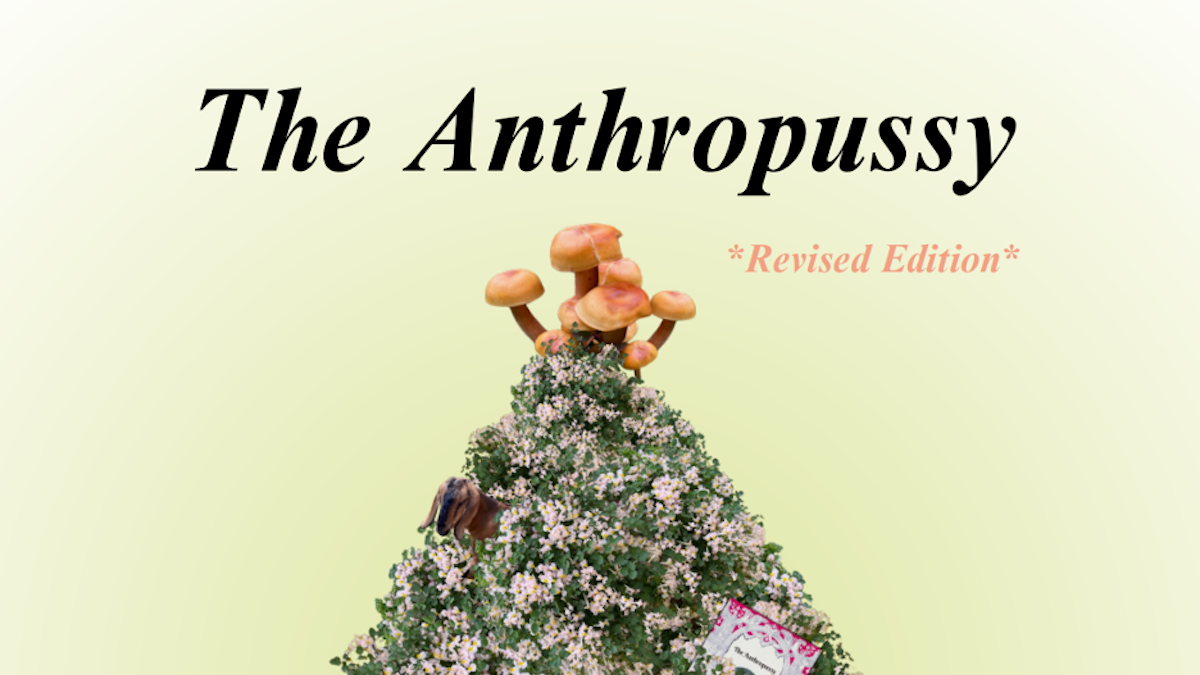
In what appears to be an almost impossible academic publication, three self-identified queer graduates from Yale-NUS (Yale University-Singapore) have managed to get one of their “zines” published by Taylor & Francis—one of the top five academic publishers in the world.
The paper — titled “The Anthropussy: An Ecolesbian Manifesto” — was written by recent graduates Isabella Blea Nunez, Beverly Choo, and Eqtaffaq Saddam Hussain.

Unlike most academic articles, the trio submitted a zine—a handmade magazine—to the Journal of Lesbian Studies. Although it was published last year, it just this week made the list of Top 50 most-read and cited papers in the Lesbian Studies field.
So, what exactly do these graduates argue?
“The Anthropocene is old news. As young queer zine-makers in Singapore, we heard the term on repeat and dared to ask: What about the AnthroPUSSY?” the paper begins.
“From this queer environmentalist pun, we birthed a new take on our relationship to the Earth amidst climate crises — and in doing so, we came out as ecolesbians. Ecolesbianism is a concept we co-created, bringing together queer ecologies, political lesbianism, ecofeminism, transecology, ecosexuality, and our own experiences.
“It combines an environmentalist recognition of the climate crisis with a feminist and queer theory analysis of the vulva as a symbol for vast potential, pleasure, intimacy, and expansiveness,” explain the authors.
The iconography of their academic submission can be found in the supplemental section of the article’s page in the Journal of Lesbian Studies. It features vulva-themed imagery throughout the zine—a term embraced by feminists to describe self-published magazines.
The students claim they were inspired by Donna Haraway’s book Chthulucene, which calls for a new era of multi-species collaboration on Earth.
“Think of the Anthropussy as the Chthulucene’s hot lesbian friend. Rather than placing blame on individuals, we are looking for a way forward — through the pussy.
“We draw some of our pussy appreciation from Luce Irigaray, who wrote beautifully of the vulva as a site of autoeroticism and plural sexualities for the feminist agenda.
“Moving beyond any essentialist understanding of the feminine as confined to the body-with-vulva, we have birthed the Anthropussy in an effort to bring vulva energy into our worldwide contentions with the more-than-human.”

The zine also features a step-by-step guide titled the “Ecolesbian Garden Guide,” which includes instructions like asking the garden for “consent.”
“In asking for consent, you are not separate from your place in history, and your ancestors’ relationship to this land. Even if the practice is new to you, or if you are scared of the answer, try asking the land for permission,” it reads.
They also created an LGBTQ-themed “Composter Flag.”

Other steps in the garden guide include: “Love Soil,” “Plant Queerly,” “Compost Your Exes and Save Your Seeds,” and, finally, embracing the identity of a “Climate Cunt.”
“To be an ecolesbian is to be a climate cunt: an iconic, fierce, and elastic member of the ecologies that we inhabit. We will leave you with a final reminder that this work should always be a little fun – or as we ecolesbians say, a little cunty.”
The trio of students are also trans activists, advocating that men without female biological parts can also have “pussy power.”
“[The] vulva is NOT a prerequisite of lesbian or ecolesbian power and identity. We say ‘pussy’ not as a criterion for entry but rather as the iconography it has always been in the queer community. Pussy as adjective, verb, symbol, shelter, and strength.”
None of the authors named in this piece have responded to emails from Liberty Affair.
This piece was brought to you by Toni Airaksinen, Senior Editor of Liberty Affair and an independent journalist based in Boca Raton, Florida. Follow her on X @Toni_Airaksinen, and on Instagram.