The Era of Social Justice Jews is Over
This is a guest essay from Z.E. Silver. Follow him on Substack.
If I am not for myself, who is for me? But if I am for my own self [only], what am I? And if not now, when? - Pirkei Avot 1:14
Shalom,
But if I am only for my own self, what am I? A single question of three that make up one verse. A single verse of eighteen that make up the first of six chapters known as the Pirkei Avot. A single compilation that is one of sixty-three volumes known as the Mishnah—a single collection of several that make up the entirety of Jewish tradition and law. Despite how large and comprehensive our texts are, liberal Jewry decided to make this singular question the bedrock of their connection and the foundation of their identity. This single question has become the escape hatch for which millions of Jews use when asked what Jewish values they hold so dear in their heart. This one question is the reason why the American Jewish community is where it is today.
In the early 20th Century, Jews endured much of the same discrimination that Black people experienced. In the middle of the last century, Jews overcame being victims of the most evil atrocity ever performed on a distinct group of people. As we got closer to the new millennium, institutional and cultural antisemitism was pervasive, but also discouraged and considered uncouth. Since the 1990s, Jews have rarely experienced any genuine antisemitism worth writing home to our ancestors. For those who were not observant, the lack of any serious Jew hatred meant a defining aspect of the American Jewish identity withered away. American Jews decided that if they were no longer oppressed, then they would fight for others. Culture war issues of the 1990s such as gay rights, feminism, and racial equality grew in prominence and Jewish institutions took up the mantle as everyone’s protectors—building the road for which Social Justice Jews would strut down.
Despite how large and comprehensive our texts are, liberal Jewry decided to make this singular question the bedrock of their connection and the foundation of their identity.
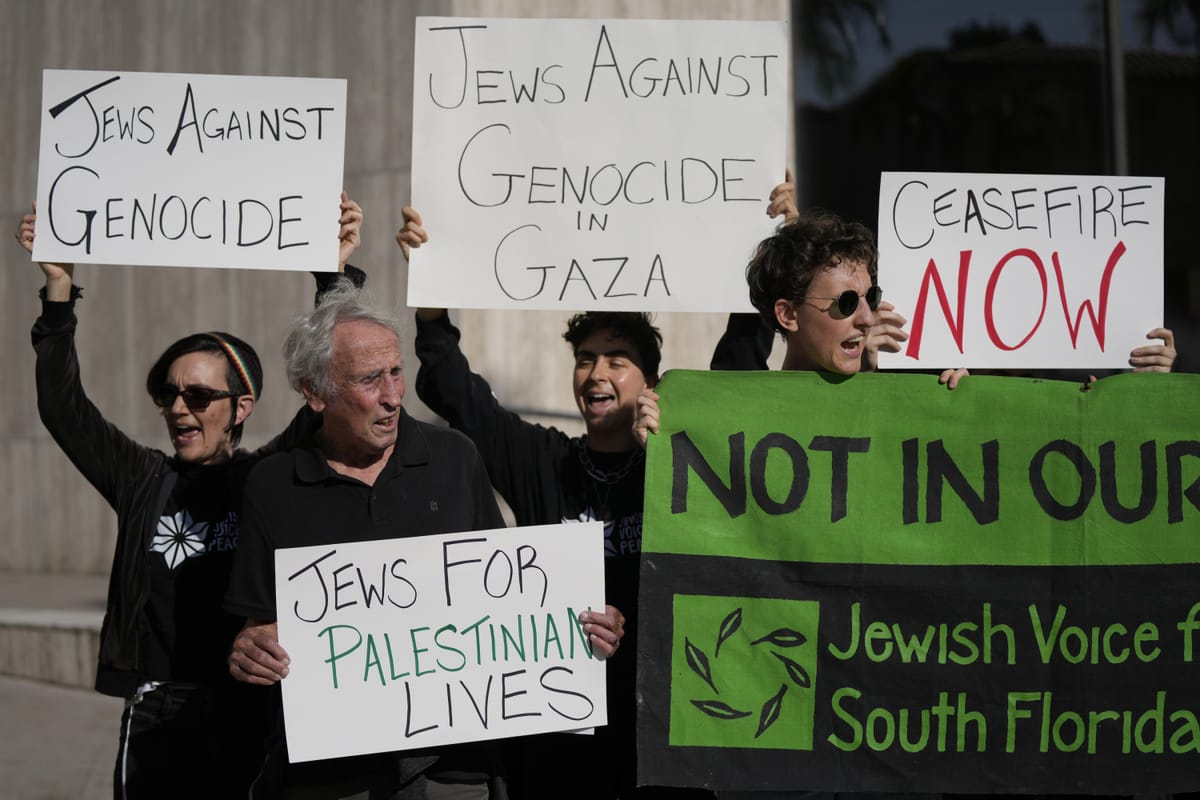
Defending against accusations of obfuscating Judaism, Social Justice Jews pulled this short verse from Ethics of the Fathers as though they were pulling Excalibur from the stone. Social Justice Jews did not demand of themselves to adhere to any other aspect of Jewish law or tradition because they were living by “Jewish values.” With Hillel the Elder’s quote as their sword, and “tikkun olam” as their shield, Social Justice Jews went to war with traditional Judaism. Every Jewish institution was another battlefield for which they fought to conquer: campus and community organizations, summer camps, synagogues, youth groups, day schools, and everything in between. Swinging their magic sword, they instilled guilt and shame into those who believed in only focusing on the Jewish community. Shielding themselves with “tikkun olam,” they repelled counterattacks by traditional Judaism that they were not following G-d’s laws. Social Justice Jews rebuked rabbis who didn’t include undocumented immigrants into their seders and disinvited speakers who had the audacity of being a registered Republican. College students of the Social Justice sect demanded their Hillel to publish a statement rejecting Trump’s “Muslim ban” in 2016 but felt strongly that “Islamophobia” be included in any responses to antisemitism.

Young people are not to blame either. Millennials didn’t build the Holocaust museums and Gen Z didn’t create the Holocaust curriculum taught in schools. Since the first Holocaust museum was established in 1961, we have spent the last sixty years educating everyone on the worst thing to happen to anyone in history to ensure it would happen… never again. Along with every other institution, Social Justice Jews fought to universalize the Holocaust experience that can only be described as a Mortal Kombat Fatality move. They simultaneously guilted us with this single question asked by Hillel the Elder while also playing on our fears that society would eventually resent us if we particularized our plight. After spending decades of time and billions of dollars, October 7th showed us how much this strategy was an utter disaster. Ronald Reagan once delivered weapons to the Taliban to solidify America’s victory in the Cold War, only for the Taliban to turn our own guns against us. Like Gipper, we too delivered weapons to “allies” only for them to turn on us with the weapons we supplied.
More than October 7th, October 8th revealed the shallowness of Social Justice Jewry and many adherents have shed its dogma to seek the depth in traditional Judaism. Former progressives left the presidential bubble blank or even voted for Trump as a form of protest against their former priests. Congregants who remain to rebuild the strength of their church are adamant there is no flaw in their doctrine despite all evidence to the contrary. To them, Democrats refusal to defend Jewish safety is due to political practicality and not because they no longer care. On the other hand, Republican action is not only negated by its lack of sincerity, but is more harmful because people will resent the Jews for the mortal sin of protecting ourselves.
All institutions who face internal contradictions eventually fall, and Social Justice Jewry is no different. Once people dedicated to Diversity, Equity, and Inclusion disqualified Jews as diverse, treated Jews unfairly relative to other minorities, and physically excluded them from these spaces, it was clear this manufactured form of our tradition was not long for this world. Like all institutions that decay over time, those who have nothing but the institution will allow themselves to decompose with it. Jews who have based their entire identity on this minuscule fraction of our tradition will cling on until the institution finally crumbles. When it does, many of these same Jews will choose to disintegrate with it, shedding any remaining connection to their heritage as it no longer “aligns” with their values.
Many of these Jews, however, will detach themselves to avoid deteriorating and will seek to reconnect with our tradition. They will appear withered and worn from working tremendously hard to save the institution for which they have spent years fighting for. So we have a choice. We can slap their hand away as they reach out or we can grab it and welcome them with a warm hug. The former is a natural and understandable response. The latter is more difficult. I know what choice I will make:
Pirkei Avot 1:15: “…and receive all men with a pleasant countenance.”
This essay was written by Z.E. Silver, who publishes the newsletter, “Gam V’gam.” He is a political and cultural commentator focused on politics both in the U.S. and abroad, with an emphasis on Jewish peoplehood, antisemitism, and Israel. Find him on X @z_e_silver. Follow his Substack here.