The First American Pope: What Conservatives Should Know About Leo XIV
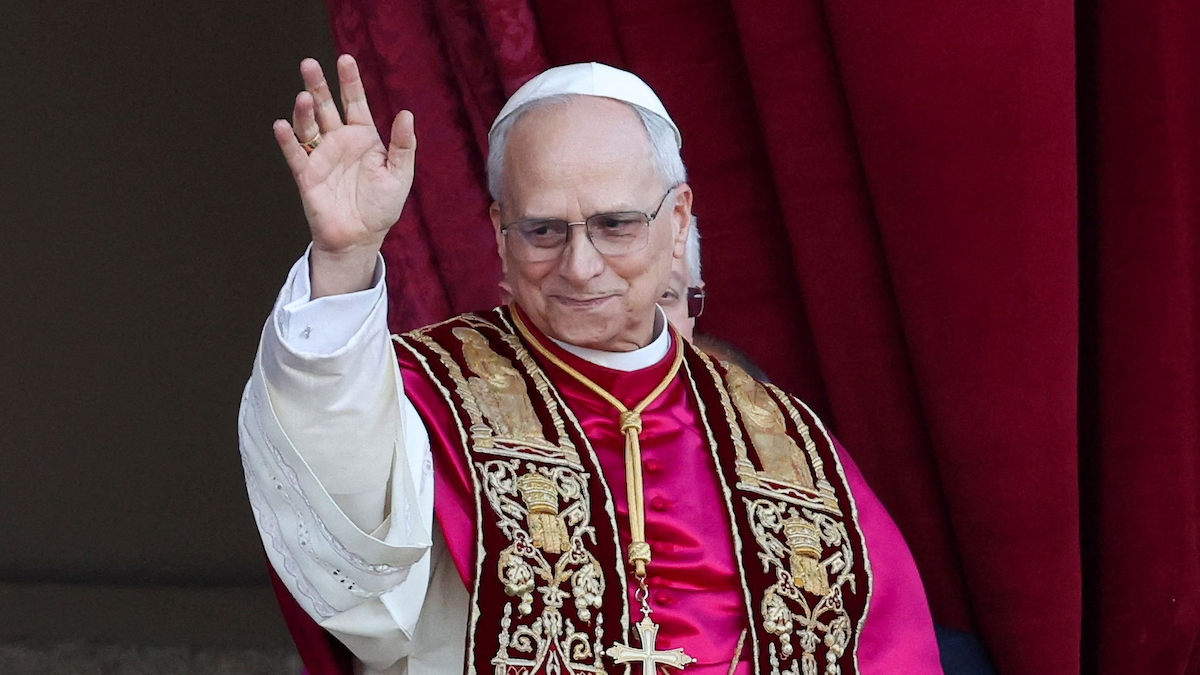
Yesterday, history was made in the Roman Catholic Church with the election of Cardinal Robert Francis Prevost as Pope Leo XIV, the first American to ascend to the papacy. For Catholics in the United States and across the Western world, this is more than a symbolic milestone. It is a moment rich with meaning, raising pressing questions about the future of the Church, the global balance of spiritual influence, and the potential re-centering of Catholic leadership in a time of cultural and geopolitical flux.
Pope Leo XIV succeeds Pope Francis, whose decade-long pontificate was marked by sweeping reforms, a focus on climate change, migration, and social justice, and a controversial approach to doctrine that alienated many traditional Catholics. The election of an American pope may suggest continuity in tone and direction—but also contains the seeds of unexpected change.
Born in Chicago in 1955, Robert Prevost was raised in a devout Catholic family of French, Italian, and Spanish heritage. He studied mathematics and philosophy at Villanova University, then pursued a life of religious service through the Order of St. Augustine. Ordained in 1982, Prevost spent over two decades as a missionary in Peru, where he ministered to some of the country’s poorest communities and eventually became bishop of Chiclayo. His pastoral dedication earned him Peruvian citizenship in 2015.
His rise within the Church hierarchy accelerated after his return to Rome, where Pope Francis appointed him Prefect of the Dicastery for Bishops and President of the Pontifical Commission for Latin America. These roles put him at the center of decision-making on episcopal appointments and Church governance throughout the Western Hemisphere.
The conclave that selected him as pope lasted less than 24 hours, concluding after just four ballots—a sign of both consensus and momentum behind his candidacy. Upon appearing on the balcony of St. Peter’s Basilica, Pope Leo XIV addressed the crowd in both Italian and Spanish, thanking Pope Francis and calling for peace, unity, and spiritual renewal.
The name "Leo XIV" evokes a strong historical lineage. The most famous papal Leo, Leo XIII, was a towering intellectual and the first modern pope to engage robustly with modernity, issuing influential writings on labor, property, and the rights of the family. Whether Pope Leo XIV intends to emulate that legacy remains to be seen, but the name choice alone signals a vision that goes beyond administrative maintenance.
For American conservatives, the emergence of a U.S.-born pope comes at a moment when traditional institutions are under fire, Western civilization feels adrift, and the role of faith in public life is being either diminished or distorted. Pope Leo XIV offers a rare convergence of credibility within the Vatican establishment and real-world experience dealing with poverty, corruption, and moral ambiguity in the developing world.
His time in Latin America gave him fluency in Spanish and a close-up view of both liberation theology and its abuses. His alignment with Pope Francis on matters of inclusion and listening to the margins is clear, but Prevost is not known as a bomb-thrower. Instead, his style is pastoral, measured, and quietly effective. His approach may provide a calming influence in a Church that has been rocked by doctrinal confusion, declining Mass attendance, and internal dissent.
For many U.S. Catholics, especially those disillusioned by the secular drift of American politics and culture, Pope Leo XIV’s election feels like a divine affirmation. The Catholic Church in the U.S. has long been both vibrant and embattled—growing in numbers in some immigrant communities while facing steep decline in others. The new pope’s roots in the American Midwest and his extensive missionary work might bridge this divide, revitalizing the Church’s witness at home and abroad.
Yet challenges await. The Catholic Church is still reckoning with the long shadow of clerical abuse scandals. It is also facing a credibility crisis in Europe and a demographic shift in Africa and Asia, where Catholicism is growing but remains culturally distinct. Pope Leo XIV will need to navigate these tensions with the discernment of a pastor and the clarity of a statesman.
His election also carries geopolitical significance. While the papacy is a spiritual office, it wields considerable soft power. The Vatican maintains diplomatic relations with over 180 countries. A pope from the United States could change perceptions of American influence abroad, for better or worse. In an era of rising secularism and anti-Western sentiment, his leadership will be scrutinized not only for theology but for diplomacy.
Already, critics and supporters alike are parsing his first public statements, seeking signs of his theological orientation. Will he uphold traditional teachings on marriage, sexuality, and the sanctity of life? Will he continue Francis’s climate activism or pivot toward a more evangelistic focus? So far, Pope Leo XIV has signaled continuity in tone, but his long tenure in the Global South suggests he may place greater emphasis on evangelization, poverty alleviation, and spiritual renewal.
Conservatives will watch closely. The temptation will be to claim him as "one of ours," but the truth is likely more complex. He is a bridge-builder, not a culture warrior. Still, his election is a moment of hope for those who believe that faith, tradition, and reason must be reasserted in a fractured world.
The Catholic Church does not exist to validate American politics. But the election of Pope Leo XIV reminds us that faith knows no borders, and that sometimes the most consequential cultural shifts come not through elections or legislation, but through providence.
In the days and months to come, we will learn more about the man behind the mitre. For now, American Catholics can rejoice—not in triumphalism, but in the possibility that the faith forged in their own neighborhoods may now shape the future of the global Church.
Michael J. Hout is Editor-in-Chief of Liberty Affair. Based in Warsaw, Poland, he writes about politics, culture, and history. Follow his latest insights on X: @michaeljhout.