Trump Is Reshaping U.S. Foreign Policy—Here’s What It Means for the World
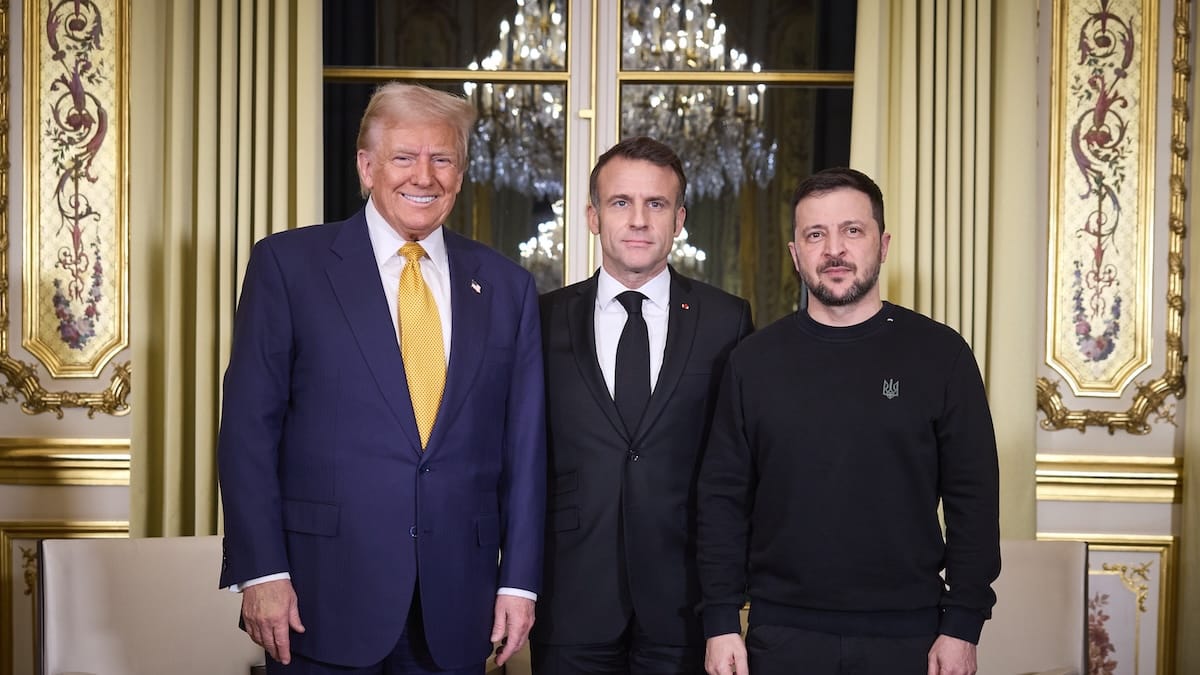
During President Trump’s tenure, U.S. foreign policy underwent a dramatic and unprecedented shift that, despite its controversies, has proven to be in the best long-term interest of both the United States and its allies. Now, as president again, Trump continues to reshape global politics with a vision rooted in strength, sovereignty, and strategic partnerships. His approach marks a departure from the traditional framework that had defined American foreign policy for decades. Instead of maintaining alliances based on dependency, his administration has pushed allies to take greater responsibility for their own defense and economic stability. This shift, while initially met with skepticism, is fostering a world where America’s allies are not mere satellite states reliant on Washington but rather independent and robust partners capable of securing their own national interests while standing firmly alongside the United States.
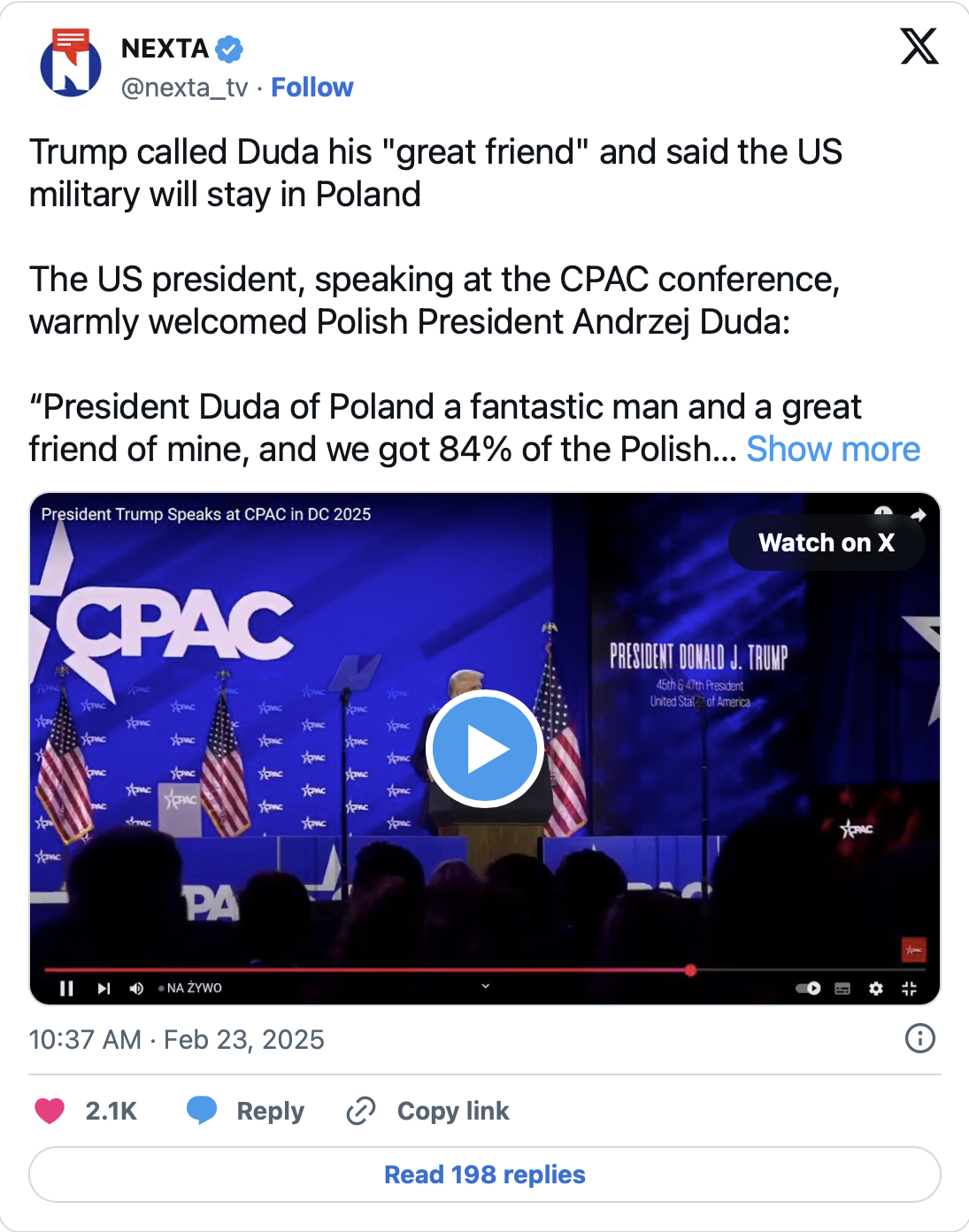
A prime example of this strategy can be seen in Poland’s response. Unlike many European nations that remain hesitant to increase defense spending, Poland has embraced military self-reliance and continues to increase its defense budget significantly. The country has announced plans to ramp up its defense spending to 6% of its GDP, a level far exceeding NATO’s minimum requirement of 2%. This commitment underscores Poland’s understanding of the new geopolitical landscape, where self-sufficiency and deterrence play a critical role in maintaining national sovereignty. The idea that every sovereign nation should be able to defend itself aligns with President Trump’s broader strategy—encouraging allies to contribute more substantially to their own security rather than relying disproportionately on American military support.

That said, while the Trump administration advocates for a more self-reliant Europe, this does not mean that the United States is abandoning the continent. The notion that Trump intends to withdraw the U.S. military presence from Europe has often been exaggerated by critics and media outlets. Instead, his administration is ensuring that American resources are being used more effectively while pushing European allies to shoulder a greater share of the collective defense burden.
The Trump Administration’s Approach to Iran and Hamas: Strength Over Weakness
One of the most defining aspects of President Trump’s foreign policy is his stance on Iran’s nuclear ambitions and the role of Hamas in regional conflicts. Unlike previous administrations that pursued diplomatic agreements that some viewed as weak or ineffective, such as the Iran Nuclear Deal (JCPOA), Trump firmly believes that peace can only be achieved through strength. This philosophy was evident in his decision to withdraw the United States from the JCPOA in 2018, arguing that the agreement was fundamentally flawed and did not adequately prevent Iran from developing nuclear weapons. Now, in his second term, Trump has doubled down on his maximum pressure campaign, further crippling Iran’s economy and limiting its ability to fund militant groups across the Middle East.
Similarly, Trump’s policy toward Hamas reflects his broader commitment to confronting terrorist organizations head-on. By recognizing Jerusalem as Israel’s capital and moving the U.S. embassy there, his administration sent an unequivocal message of support for Israel, a key American ally in the region. These moves, while criticized by some as destabilizing, reinforced the U.S. commitment to Israel’s sovereignty. Now, as Hamas continues its aggression, Trump’s administration remains unwavering in its support for Israel’s right to defend itself, backing stronger military aid packages and intelligence-sharing initiatives.
The Controversy Over Ukraine: A Strategic Maneuver
Trump’s stance on Ukraine continues to be one of the most debated aspects of his foreign policy, with many observers labeling his statements as controversial or even misguided. However, these critics often overlook key strategic elements of his approach.
First and foremost, Trump’s handling of the situation has revealed a growing rift between Russia and China. Historically, China and Russia have been seen as aligned in their opposition to Western dominance, but recently, China has taken an unexpectedly more neutral, and at times supportive, stance toward Ukraine. Beijing has issued statements that subtly back Ukraine’s sovereignty, a development that would have been unthinkable just months prior. This shift weakens the Russia-China alliance, which has long posed a strategic challenge to the West. A unified front between these two authoritarian powers limits the ability of Western nations to maneuver diplomatically and economically. By creating circumstances that force China to distance itself from Russia, Trump’s approach has strategically complicated Moscow’s position.
Second, European nations have been compelled to step up their financial and military commitments to Ukraine. Under previous U.S. administrations, European countries often relied on Washington to take the lead in responding to conflicts in Eastern Europe. However, Trump’s emphasis on burden-sharing has pushed European nations to provide more resources to Ukraine, reinforcing the idea that Europe must take greater responsibility for its own security. While some critics have viewed Trump’s statements on Ukraine as dismissive or lacking in commitment, they have actually served to push European allies into action, ensuring a more balanced approach to supporting Ukraine against Russian aggression.
Economic Liberty and Deregulation: The Foundation of a Stronger West
Beyond foreign policy, Trump continues to champion economic liberty, deregulation, and free-market policies as pillars of American strength. His administration remains committed to reducing bureaucratic red tape, lowering corporate taxes, and promoting market-driven growth. These policies are not only designed to make the U.S. economy more competitive but also carry important implications for Europe.

Many European nations continue to struggle with the burdens of an overextended welfare state and an increasingly complex regulatory environment. While social welfare programs are a fundamental part of many European economies, they often come at the cost of economic dynamism and growth. Trump’s economic policies serve as a wake-up call, highlighting the benefits of reducing government intervention and allowing market forces to drive innovation and prosperity.
For Europe to remain competitive in the global economy, it must seriously consider rolling back certain aspects of the welfare state and scaling down regulatory mechanisms that stifle entrepreneurship and business growth. Without such reforms, European nations risk falling further behind in an era where economic power is increasingly shifting toward Asia and other rapidly developing regions.
Conclusion
In sum, the Trump administration’s foreign policy represents a major departure from previous U.S. approaches, but it is one that ultimately seeks to secure America’s long-term interests while encouraging allies to become stronger, more self-reliant partners. His firm stance on defense spending, Iran, Hamas, and Ukraine reflects a belief in strength as the primary means of maintaining peace and stability. Additionally, his economic policies underscore the importance of deregulation and free-market principles as key drivers of prosperity.
While Trump’s policies are often controversial, they have initiated critical conversations that are reshaping the global geopolitical landscape. By pushing allies to take on greater responsibility and challenging conventional diplomatic wisdom, his administration is laying the groundwork for a stronger and more resilient Western alliance. The long-term effects of these policies are still unfolding, but one thing is clear: Trump’s presidency marks a decisive shift in how the United States engages with the world.
Ziya H. is a Contributor for Liberty Affair. He lives in Warsaw, Poland. Follow him on X: @hsnlizi