Trump’s Second Act: 100 Days That Echo the Republic’s Founding Spirit
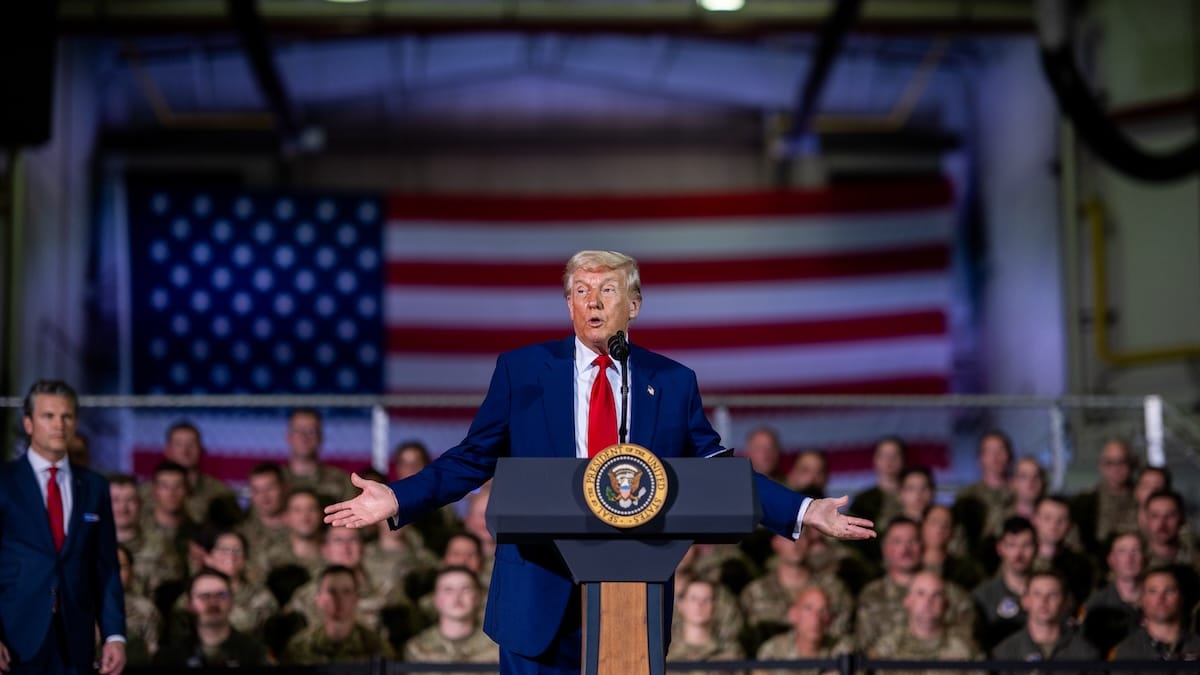
In his recent interview with ABC News, President Donald J. Trump—now in the early days of his historic second term—presented the American people with what can be described as both a retrospective defense of his past policies and a bold, unflinching blueprint for national renewal. There was no obfuscation, no manicured spin characteristic of the Beltway elite. What emerged instead was the portrait of a man at war—not merely with political adversaries, but with a failing technocratic order, the metastasized bureaucracy of the modern state, and a worldview that has prioritized Davos over Detroit.
Trump’s tone was firm and defiant as he detailed the early accomplishments of his renewed mandate. He addressed the border crisis in moral terms—terms the political establishment has long avoided. Citing the staggering statistic of 11,888 violent criminals, including murderers, who had entered the United States illegally, Trump painted a dire picture of a nation hemorrhaging not just wealth but sovereignty. Gang members, many affiliated with the notoriously brutal MS-13 from El Salvador, were not merely a question of immigration. They represented, in Trump’s view, an existential threat to the American social fabric.
A Nation in Battle
This framing was no accident. It underscores a deeper ideological clash between two competing visions of the nation: one rooted in constitutional republicanism and national sovereignty, and the other beholden to the post-national utopianism of transnational governance. In this light, Trump is not merely a conventional politician—he is a disruptive historical force. He stands in the tradition of Andrew Jackson and Ronald Reagan, presidents whose leadership marked inflection points in the evolution of the American experiment.
The economic consequences of inaction, he argued, were equally severe. “We’re losing three to five billion dollars a day,” Trump said, referencing both the direct costs of illegal immigration and the broader inefficiencies resulting from decades of policy neglect. Yet while his language was blunt, it was grounded in substance. During his first term, inflation averaged around 1.2% despite sweeping tariffs on Chinese goods. Gasoline and grocery prices, according to Trump, are now beginning to fall. This, he argued, offers proof that his policies were not only effective, but rooted in a realism Washington abandoned long ago.
Trump also looked outward. He drew a direct line between the disastrous withdrawal from Afghanistan in August 2021 and a series of global calamities that followed. The evacuation, overseen by the Biden administration, was not merely a failure of planning but, in Trump’s eyes, a symbolic moment of imperial retreat. That perceived weakness, he suggested, emboldened America’s adversaries. Vladimir Putin’s invasion of Ukraine in February 2022 and the October 7, 2023 Hamas attacks on Israeli civilians were, in Trump’s telling, symptoms of a broader geopolitical unraveling fueled by American indecision and decline.
The Return of Small-d Democracy
To understand Trump’s appeal, one must strip away the narrative scaffolding built by legacy media and examine the foundation beneath. This is not populism in the caricatured, demagogic sense favored by coastal think tanks. It is about democratic legitimacy—the “small-d” democracy that begins and ends with the people. Where modern technocrats view democracy as a procedural veneer for elite rule, Trump sees it as a visceral mandate from citizens increasingly alienated from the institutions that claim to represent them.
This is where Trump’s second term—especially these first 100 days—resonates with historical weight. Just as Franklin Delano Roosevelt unleashed a wave of executive action during the early months of his presidency to confront the Great Depression, Trump has moved with startling speed. But unlike FDR, whose policies expanded the federal government, Trump’s agenda is essentially subtractive: aimed at dismantling the administrative state, trimming bureaucratic fat while preserving the sinews of national strength.
That vision terrifies America’s ruling class not because it’s reckless, but because it is coherent. Trump’s proposed downsizing is not anarchic—it is strategic. The newly formed Department of Government Efficiency (DOGE), an office within his administration, has reportedly saved $150 billion by cutting waste and inefficiency, according to Trump. While that number is difficult to independently verify, the initiative signals a broader mission: to make government accountable once again.
The Real Threat to Democracy
But Trump’s war is not just against inefficiency. It is against the moral and institutional decay of a ruling class that sees the American republic not as a living covenant between citizens and state, but as a managerial problem to be optimized. This is the deep irony: those who most loudly claim to defend democracy are often its most dedicated saboteurs. They are the same elites who speak of “our sacred institutions” while colluding with intelligence agencies to suppress dissenting voices. The same media figures who demand transparency while serving as mouthpieces for entrenched power. In contrast, Trump draws from a more elemental vision of the republic—one in which the citizen, not the expert, stands at the center.
Here, the echoes of Jackson are most distinct. Jackson, too, was vilified by the intellectuals and elites of his time. He was labeled a demagogue, a tyrant, a norm-breaker. But Jackson’s enduring legacy lies not in the controversies of his presidency, but in the precedent he set: that the presidency could be a direct instrument of the people’s will rather than a steward of elite consensus. Trump’s political instincts fit this tradition. He does not seek merely to govern—he seeks to reorder the machinery of state to reflect the priorities of those it was meant to serve.
To critics, this is dangerous. To supporters—and they are many—it is liberating. For decades, they have watched the language of democracy co-opted to justify policies that decimated their towns, their industries, and their sense of national belonging. They have buried loved ones lost to wars with no clear purpose, watched fentanyl pour across an undefended border, and sent their children into public schools that increasingly resemble ideological battlegrounds. Trump’s second term, to them, is not a return to the past—it is a course correction. Not toward isolationism, but toward national prioritization. “America First” is no longer just a slogan—it is a governing philosophy.
The Dissident Presidency
In an era defined by aesthetic politics—where virtue is signaled via hashtags and geopolitical strategy is outsourced to branding consultants—Trump’s message is abrasive, even uncouth. But it is also unmistakably real. He does not offer poetic abstractions. He offers trade-offs, consequences, and hard truths. And perhaps that is what most sets him apart: his refusal to lie to the American people about the gravity of the moment we are living through.
If the 20th century belonged to managerial liberalism, the 21st may yet belong to the democratic dissidents—those who challenge not only policy outcomes but the legitimacy of the systems that generate them. Trump, whatever one thinks of his style or temperament, is clearly one of those figures. Like Reagan, he is a renegade who came not to manage decline, but to reverse it. Like Jackson, he sees confrontation not as a liability, but as the crucible of change.
Whether history vindicates him remains to be seen. But one thing is already clear: Trump’s second term is not simply a continuation of past policy. It is a rebuke of an entire era—and a reminder that a republic belongs to its people, or it belongs to no one at all.
Sources and Further Reading:
- ABC News Interview with President Trump, March 2025
- U.S. Department of Homeland Security Reports, 2023–2024
- FBI.gov – “MS-13 Threat,” 2023
- Robert V. Remini, The Life of Andrew Jackson (HarperCollins, 1988)
- Steven F. Hayward, The Age of Reagan (Crown Forum, 2009)
- U.S. Bureau of Labor Statistics – Inflation Data (2017–2020)
- U.S. Energy Information Administration – Gasoline Prices
Ziya H. is a Contributor for Liberty Affair. He lives in Warsaw, Poland. Follow him on X: @hsnlizi