UK Schools Target Andrew Tate While Calling False Accusations ‘Conspiracies’
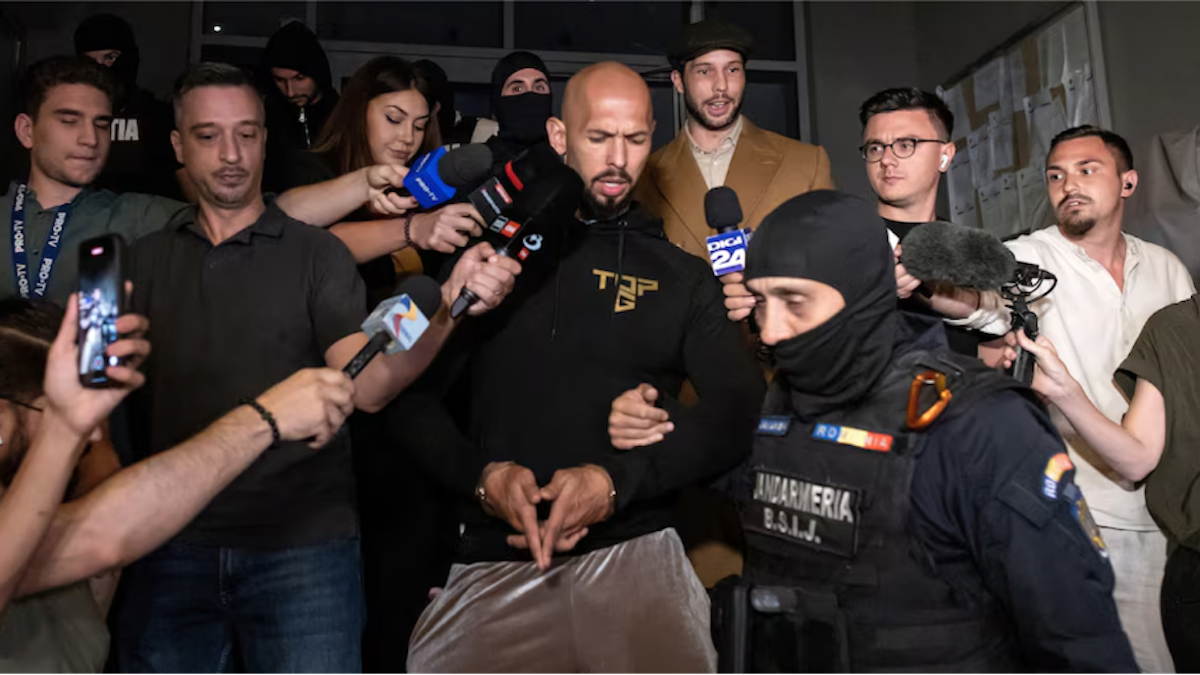
A new resource has been created to address the influence of “masculinity influencers” like Andrew Tate on young men’s sense of masculinity. The guide notably claims that false rape accusations and the notion that courts benefit women are “conspiracy theories” rather than issues affecting untold thousands annually.
Published by three professors last fall, the guide has recently been adopted by some United Kingdom schools. The 39-page resource was created by cyberbullying experts, who argue that solving cyberbullying requires an interrogation of young boys’ masculinity.
Dr. Darragh McCashin, a professor at the School of Psychology at Dublin City University, alleged in an interview that schoolteachers are “crying out” for help. The guide encourages teachers to notice and intervene with male students who engage with “problematic” masculinity influencers, citing Andrew Tate as a harmful example. However, only 15% of UK high school students think Tate is “good,” and even fewer watch his content regularly. The vast majority—58%—hold an unfavorable opinion of Tate, while 28% either don’t know who he is or don’t engage with his material.
Other influencers mentioned in the guide include women who support men and a handful of lesser-known manosphere personalities. The authors write, “Within these online influencer cultures, other regressive ideas about masculinity are promoted, such as the idea that ‘real men’ must not show emotion or vulnerability, which advocates emotional stoicism.”
“These representations of masculinity can be harmful for boys and men as they can lead them to believe that they must acquire wealth and material possessions in order to be successful,” the guide continues.
The guide also penalizes young men for discussing issues like false sexual misconduct allegations or perceived gender biases in divorce courts. Teachers are instructed to push back when students express these views, framing such concerns as “gendered disinformation.” It explicitly states that beliefs like “modern laws give preferential treatment to women” and “women make false rape accusations” are “conspiracy theories.” Teachers are told to “be prepared to challenge such statements with appropriate responses.”
The professors further suggest that boys who verbalize these opinions may require “specific support” for complex social, cultural, or psychological reasons. Yet nowhere in the guide do the authors clarify that modern custody and divorce laws still disproportionately favor birth mothers. Nor does the guide acknowledge that even female researchers agree that false rape accusations occur, citing studies like Sabiha (2024), Fansher (2023), and Goodyear (2022).

Dr. McCashin has also recently warned of the “dangerous rise of traditional masculinity.” He said, “There has been a rise in traditional masculinity attitudes in the classroom, as well as work done in the UK NGO sector, that have pointed to an uptick in misogynistic and sexist attitudes and behaviors, particularly from pre-teen boys.”
“All of that kind of points to the fact that manosphere online content might be having an adverse impact on boys and men in terms of their progression to very traditionalist notions of what it is to be a man, what masculinity actually means.”
He added, “The focus should be on critically examining and challenging harmful ideas and behaviors associated with masculinity in ways that support boys in building healthy, respectful, and equitable social and intimate relationships.”
The guide, written by Dr. Fiona O’Rourke, Dr. Katherine Baker, and Dr. Darragh McCashin, and sponsored by the Dublin City University Anti-Bullying Centre, reflects a growing trend among academics and activists to frame traditional masculinity as inherently harmful. Critics argue this approach unfairly targets young men, dismissing their valid concerns about societal pressures as mere conspiracy theories.
This report was brought to you by Toni Airaksinen, Senior Editor of Liberty Affair and a journalist based in Delray Beach, Florida. Follow her on Substack and on X @Toni_Airaksinen.